Felch Quarry
Colorado, United States
Morrison Formation
approximate site marker
Pronunciation: AL-oh-SORE-us FRAJ-ih-lis
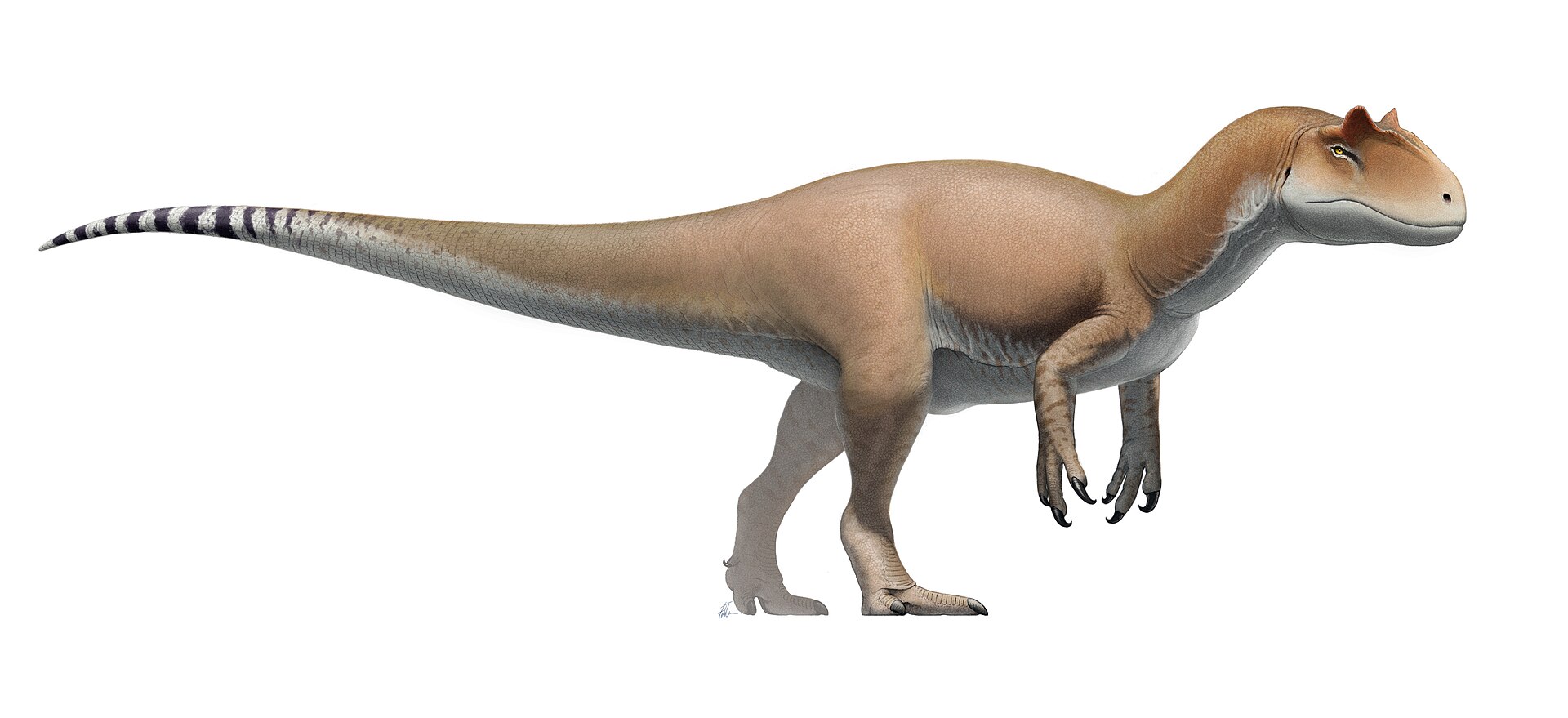
A large Morrison Formation predator with paired brow crests, a lightly built skull, serrated teeth and powerful three-fingered forelimbs. Its scientific identity was stabilised with a new type specimen in 2023.
Last updated 13 July 2026
Field guide
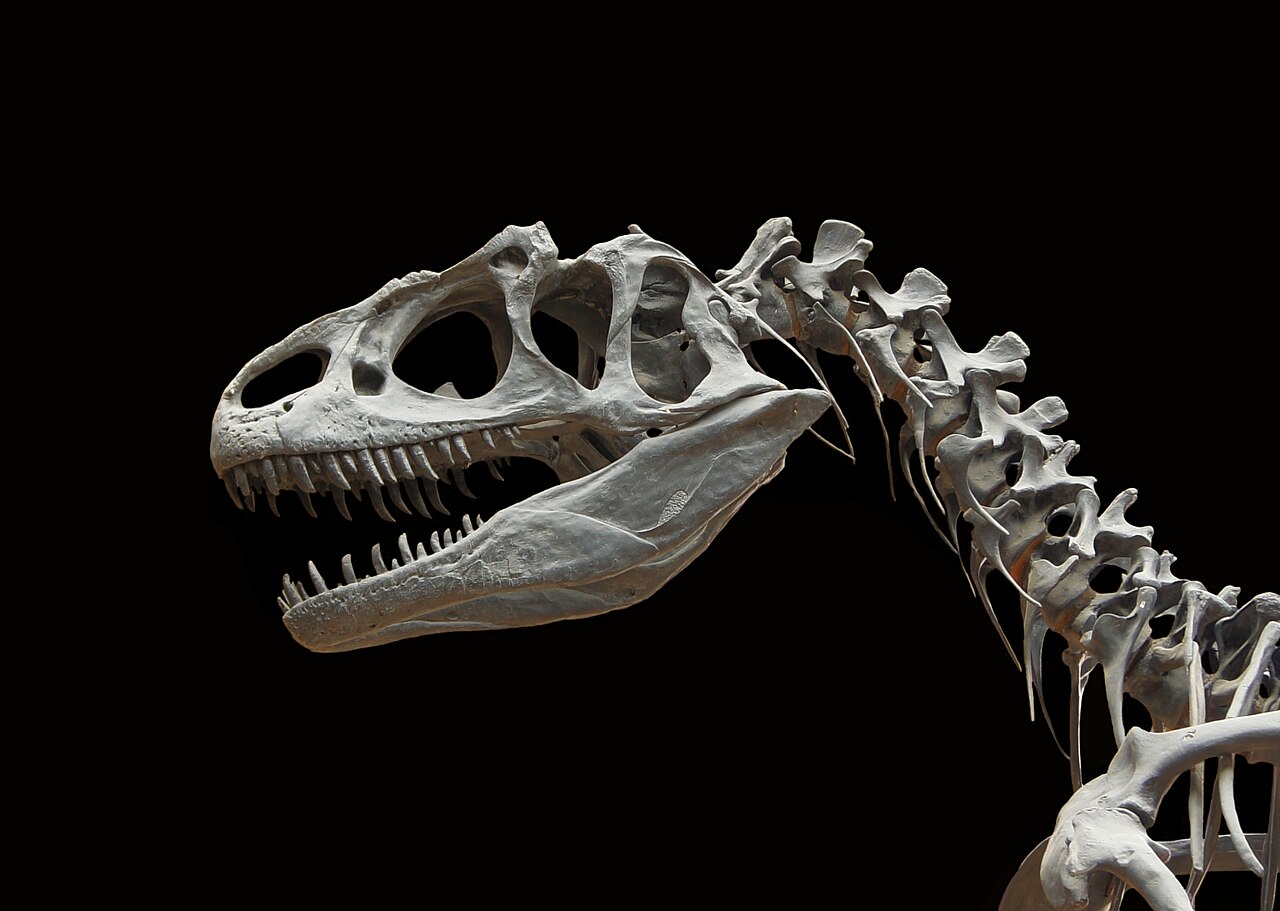
Allosaurus fragilis was one of the principal large predators of Late Jurassic western North America. It had a relatively light, open skull, small crests above the eyes, recurved cutting teeth, muscular hind limbs and grasping hands with three clawed fingers. Numerous specimens make Allosaurus anatomically well known, but the genus has a long and complicated taxonomic history. Material once grouped under A. fragilis has been divided among other species, and the International Commission on Zoological Nomenclature designated the nearly complete Smithsonian skeleton USNM V 4734 as the species' neotype in 2023.
Its fossils occur between approximately 154 and 148 million years ago. Values shown here are approximate and reflect the current curated seed dataset.
Form and function
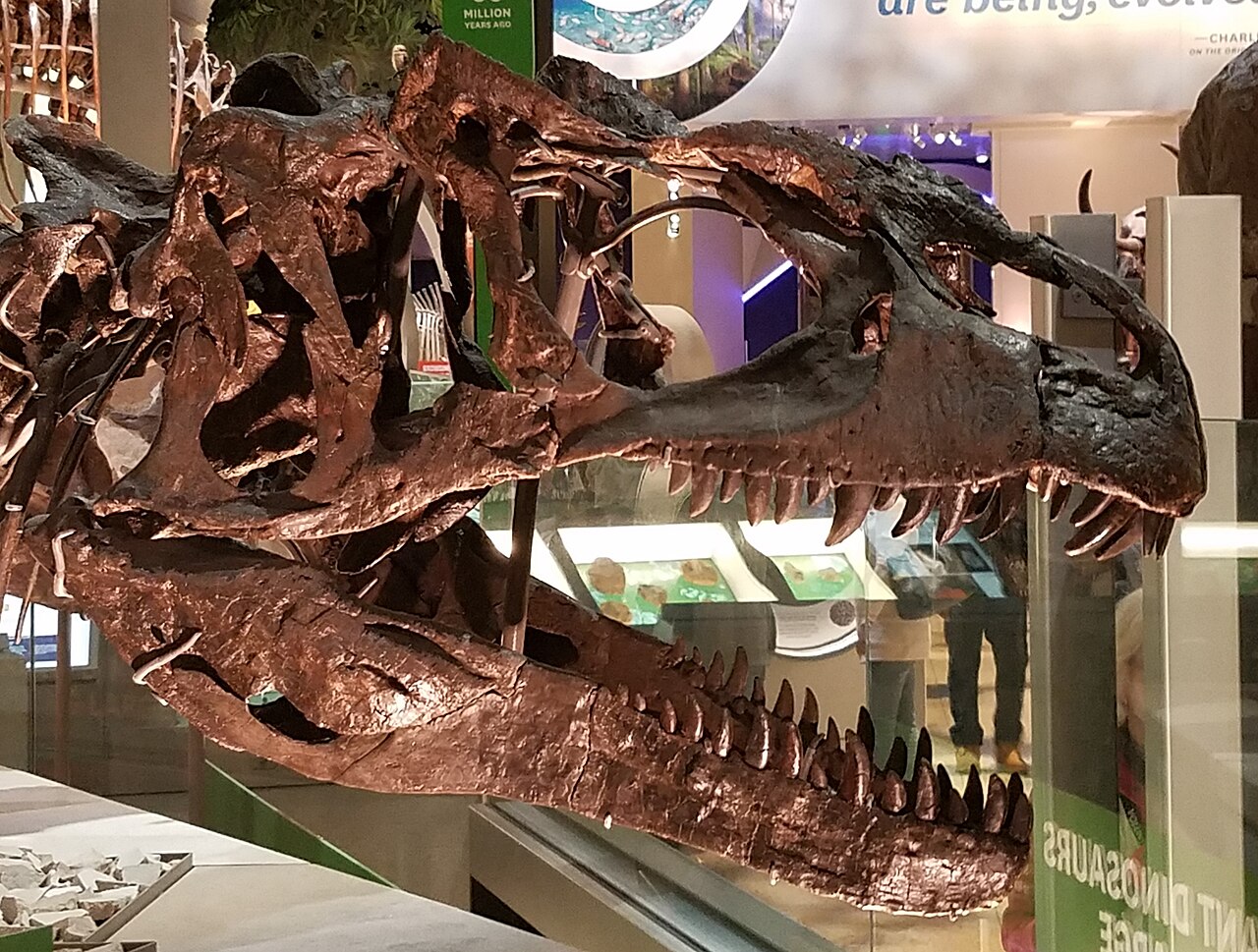
The skeleton is known from many individuals, but museum mounts may combine bones from several animals or use restored and cast elements. USNM V 4734 is especially important because it is a largely associated individual and now defines the name A. fragilis. Its skull was deep but full of openings that reduced weight, while the neck and forelimbs were built to contribute to prey handling.
Evolutionary position
This simplified classification path shows one placement from Dinosauria to this species. Each step is clickable, and other analyses may support alternative relationships.
Open interactive positionScale
Simplified length comparison using preferred dataset estimates; body shape and posture are not represented.
Scientific record
Othniel Charles Marsh named Allosaurus fragilis in 1877 from fragmentary Morrison Formation fossils catalogued as YPM 1930. The name Allosaurus means 'different lizard', referring to vertebrae that appeared unusual at the time, while fragilis referred to their lightly constructed form. Marshall P. Felch collected the much more complete USNM V 4734 at Felch Quarry, Colorado, in 1883–1884. Charles W. Gilmore described that skeleton in detail in 1920. Because Marsh's original holotype was too incomplete to diagnose reliably, the ICZN formally replaced it with USNM V 4734 as the neotype on 29 December 2023.
Naming authors: Othniel Charles Marsh.
Palaeoenvironment
A. fragilis inhabited the seasonal river floodplains and open woodlands represented by the upper Morrison Formation. The environment alternated between wetter and drier conditions and supported stegosaurs, ornithopods and several kinds of enormous sauropod, as well as competing theropods such as Ceratosaurus and Torvosaurus.
Allosaurus was an active carnivore and scavenger, but its exact feeding technique remains debated. Biomechanical models agree that the skull could withstand substantial stress, while differing over how bites, neck-driven pulling and head movements were combined. Injuries and healed pathologies show that individuals survived serious trauma. Claims of coordinated pack hunting are not supported by direct evidence; bonebeds can form through many processes.
Worth knowing
Fossil distribution
Colorado, United States
Morrison Formation
approximate site marker
Utah, United States
Morrison Formation
approximate site marker
Markers are deliberately approximate. They identify published fossil areas without exposing sensitive excavation coordinates.
Open interactive mapFossil specimen record
Washington, D.C., United States
Original, largely complete skeleton USNM V 4734, designated the neotype of A. fragilis by the ICZN in 2023. The mounted specimen includes real fossil bones and is displayed crouching over a nest.
New Haven, United States
Repository of fragmentary original holotype YPM 1930. It remains historically important but was replaced as the name-bearing specimen because it is not sufficiently diagnostic. Public display is not confirmed.
A research repository is not necessarily a public exhibit. Loan and display status can change, so check with the institution before visiting.
Media record
Evidence
Othniel Charles Marsh · American Journal of Science · 1877
Open sourceCharles W. Gilmore · Bulletin of the United States National Museum · 1920
Open sourceJames H. Madsen Jr. · Utah Geological Survey Bulletin 109 · 1976
Open sourceEmily J. Rayfield, David B. Norman, Celeste C. Horner and 4 coauthors · Nature · 2001
Open sourceEric Snively, John R. Cotton, Ryan Ridgely, Lawrence M. Witmer · Palaeontologia Electronica · 2013
Open sourceInternational Commission on Zoological Nomenclature · Bulletin of Zoological Nomenclature · 2023
Open sourceSmithsonian Institution · 2024
Open source