Bernissart coal mine
Hainaut, Belgium
Sainte-Barbe Clays
approximate site marker
Pronunciation: ig-WAH-no-don ber-nih-SAR-ten-sis
A large Early Cretaceous herbivore with a thumb spike, a weight-bearing three-fingered hand and a famous Belgian fossil record of about thirty articulated skeletons. Those fossils transformed Iguanodon from a fragmentary curiosity into one of the first well-understood dinosaurs.
Last updated 13 July 2026
Field guide
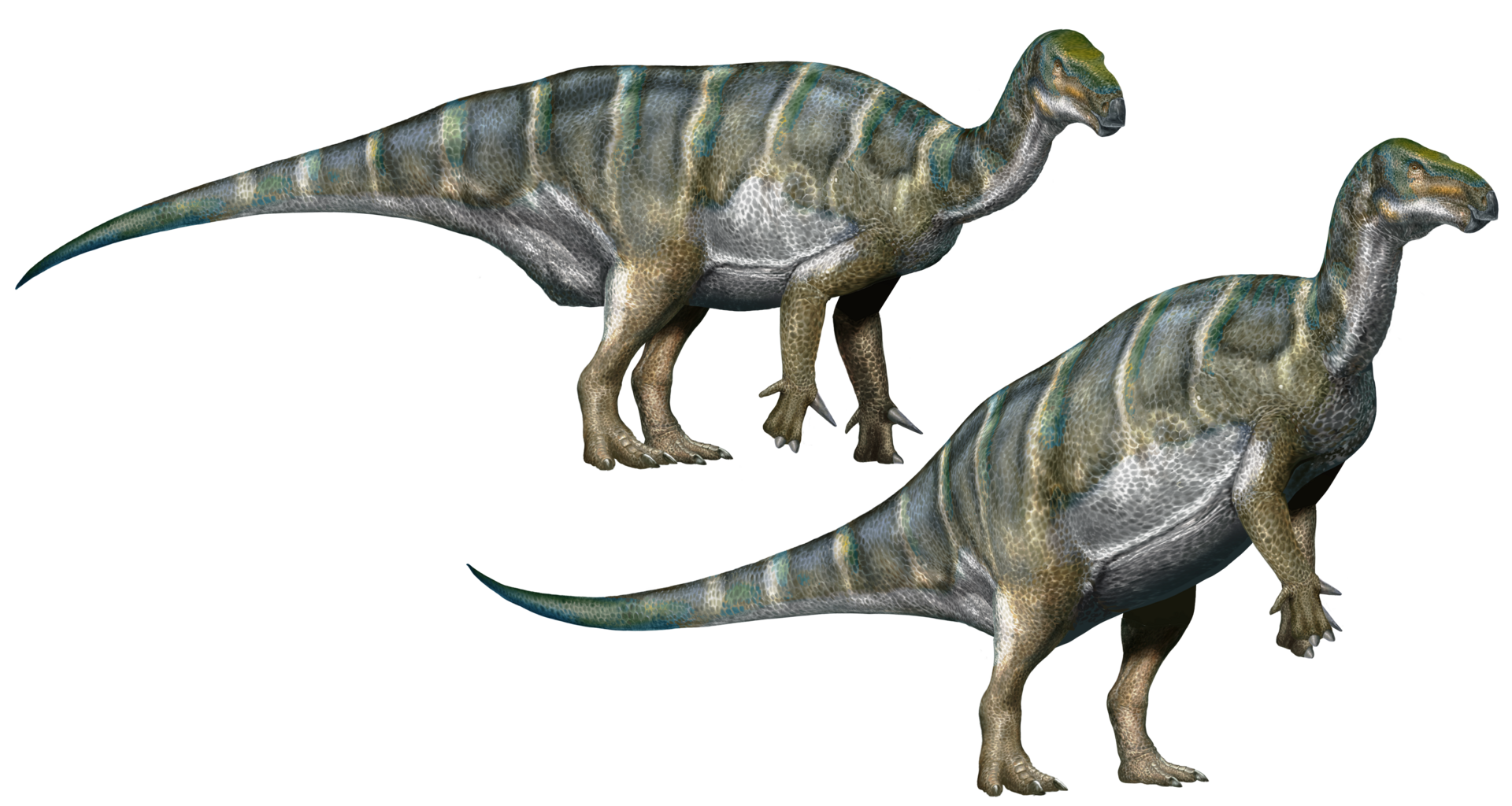
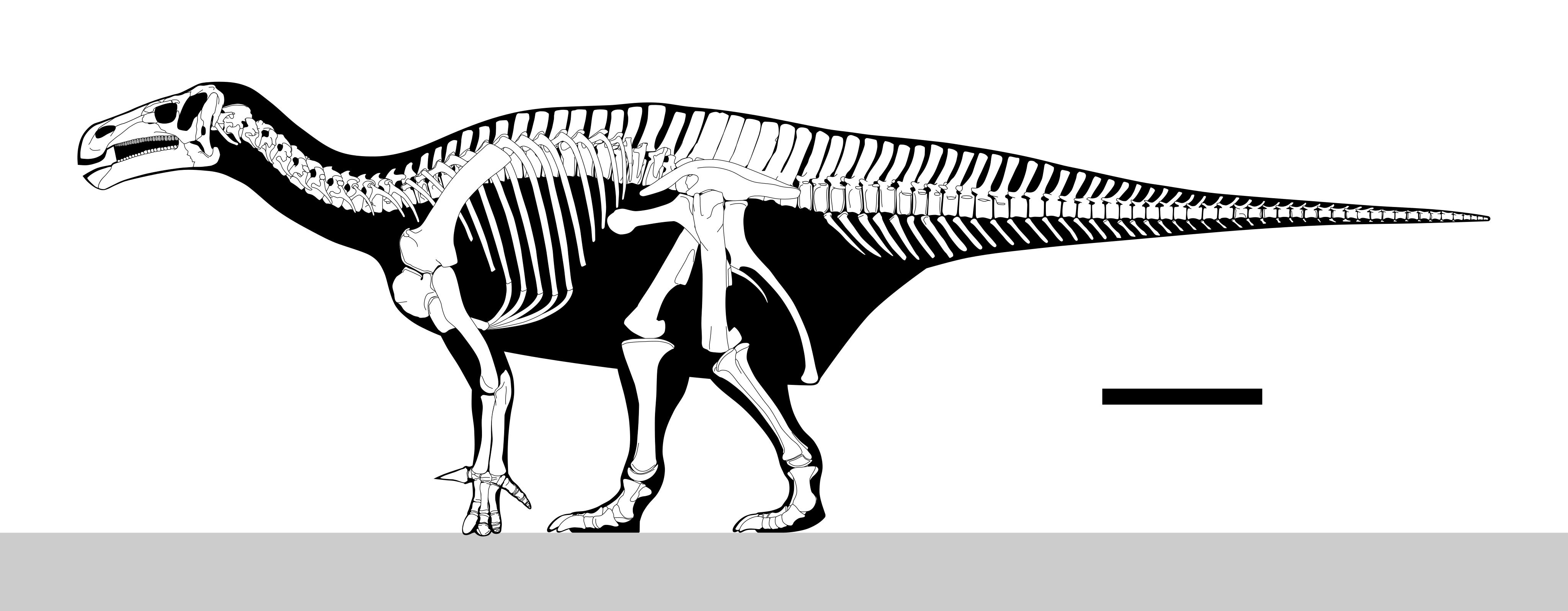
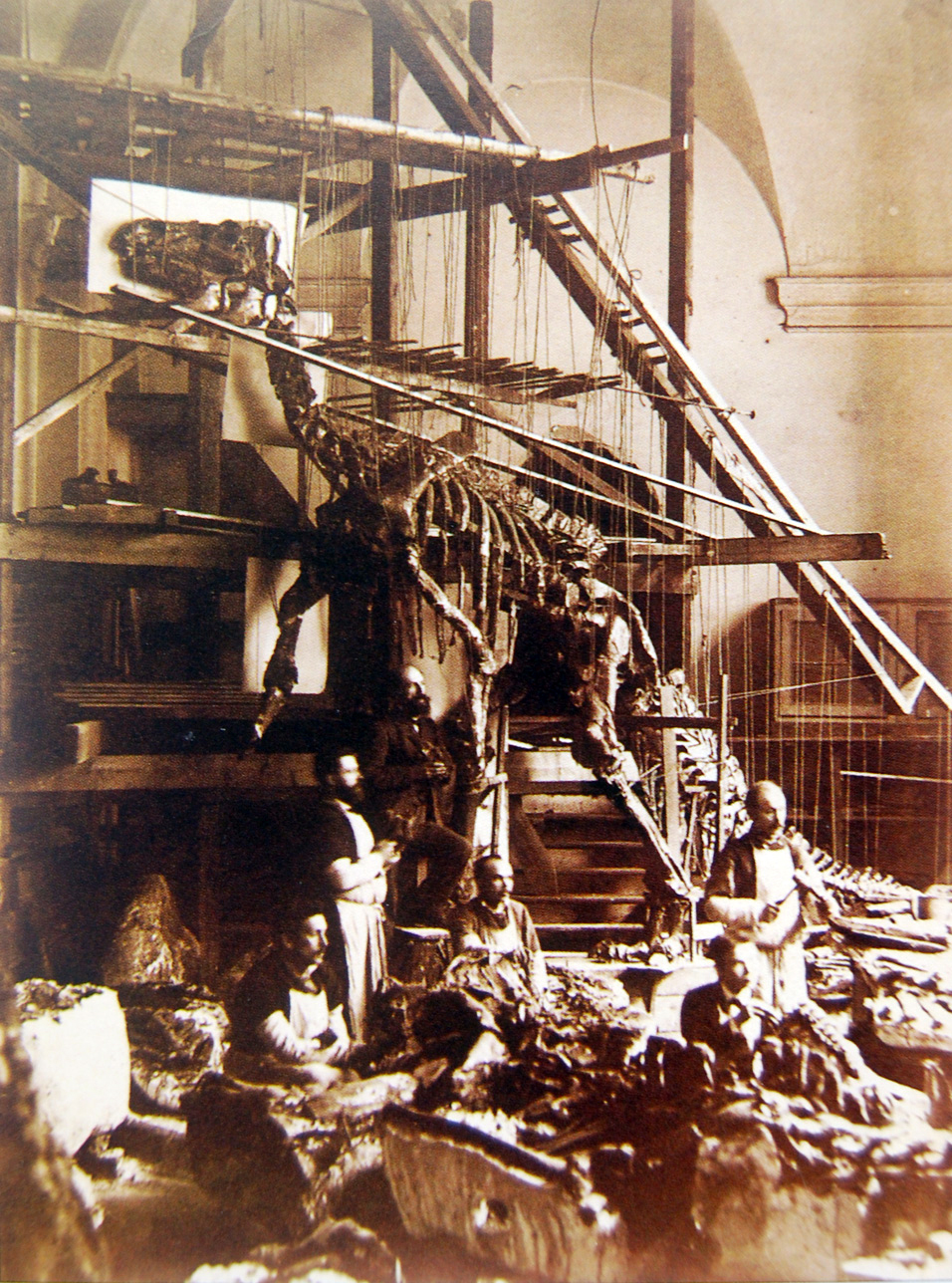
Iguanodon bernissartensis was a robust iguanodontian from the Barremian to earliest Aptian of western Europe. Its broad beak and tightly packed cheek teeth processed plants, while its unusually specialised five-fingered hands combined walking, grasping and a conical thumb spike. The Bernissart skeletons were historically mounted upright with their tails on the ground, but modern study places the trunk and tail much more horizontally and indicates that the animal could move on either two or four limbs.
Its fossils occur between approximately 126 and 122 million years ago. Values shown here are approximate and reflect the current curated seed dataset.
Form and function
The skull ended in a toothless beak, with replacement teeth arranged behind it in grinding batteries. On each hand, the first digit formed the famous spike; the three central digits were bound into a hoof-like weight-bearing unit; and the mobile fifth digit could flex toward the palm. Powerful hind limbs, a broad pelvis and a tail stiffened by ossified tendons balanced the body. The palms faced inward rather than lying flat on the ground, so older reconstructions with splayed, pronated hands are anatomically misleading.
Evolutionary position
This simplified classification path shows one placement from Dinosauria to this species. Each step is clickable, and other analyses may support alternative relationships.
Open interactive positionScale
Simplified length comparison using preferred dataset estimates; body shape and posture are not represented.
Scientific record
Coal miners encountered the great Bernissart bonebed 322 metres below ground in the Sainte-Barbe mine in 1878. Louis De Pauw directed the difficult recovery and preparation, while Louis Dollo studied and mounted the skeletons. George Albert Boulenger named Iguanodon bernissartensis in 1881. The genus Iguanodon itself had been coined by Gideon Mantell in 1825 from much more fragmentary English material; in 2000 the ICZN stabilised the name by making the Belgian species the genus's type species and designating IRSNB 1534 as its lectotype.
Discovery credit: Bernissart coal miners, Louis De Pauw.
Naming authors: George Albert Boulenger.
Palaeoenvironment
The Bernissart animals lived around a warm, humid freshwater wetland or swamp within a subsiding sinkhole system. The same deposit preserves fish, turtles, crocodile relatives, insects, conifers and abundant ferns, giving an unusually detailed view of the ecosystem. Exactly how the many iguanodons entered and accumulated in the bone-bearing clay remains debated, and the deposit may record more than one mortality event.
Iguanodon cropped vegetation with its beak and processed it with dental batteries. Limb proportions and hand construction support facultative locomotion: four-footed walking and feeding were possible, while the hind limbs remained dominant and bipedal movement was also available. The thumb spike could have served in defence, feeding or display, but no fossil records a strike. A concentration of many skeletons at Bernissart is compatible with social behaviour, yet a mass-death deposit alone cannot prove a permanent herd structure.
Worth knowing
Fossil distribution
Hainaut, Belgium
Sainte-Barbe Clays
approximate site marker
Markers are deliberately approximate. They identify published fossil areas without exposing sensitive excavation coordinates.
Open interactive mapFossil specimen record
Brussels, Belgium
Eight original I. bernissartensis skeletons from the 1878–1881 Bernissart excavations stand in a three-storey glass case, with additional original skeletons displayed as they were found in the basement. The upright poses are preserved as historic nineteenth-century mounts and should not be read as the current locomotor reconstruction.
Bernissart, Belgium
The official regional visitor listing describes a real, five-metre-high Iguanodon skeleton discovered by Bernissart miners in 1878. The listing does not identify its precise collection number or ownership, so those details are deliberately left unstated here.
Paris, France
A 7.75-metre skeletal cast made from the Bernissart material and presented to the Paris museum on 13 January 1899. It is an historically significant cast, not an exported original skeleton.
A research repository is not necessarily a public exhibit. Loan and display status can change, so check with the institution before visiting.
Media record
Evidence
David B. Norman · Mémoires de l'Institut Royal des Sciences Naturelles de Belgique 178 · 1980
Open sourceInternational Commission on Zoological Nomenclature · Bulletin of Zoological Nomenclature · 2000
Open sourceInstitute of Natural Sciences, Brussels
Open sourceVisitWapi
Open sourceMuséum national d'Histoire naturelle
Open source