Stonesfield Slate quarry region
Oxfordshire, England, United Kingdom
Taynton Limestone Formation
regional marker
Pronunciation: MEG-ah-lo-SORE-us buck-LAN-dee-eye
The first non-avian dinosaur scientifically named: a large Middle Jurassic English predator known from a diagnostic lower jaw and scattered skeletal remains.
Last updated 16 July 2026
Field guide
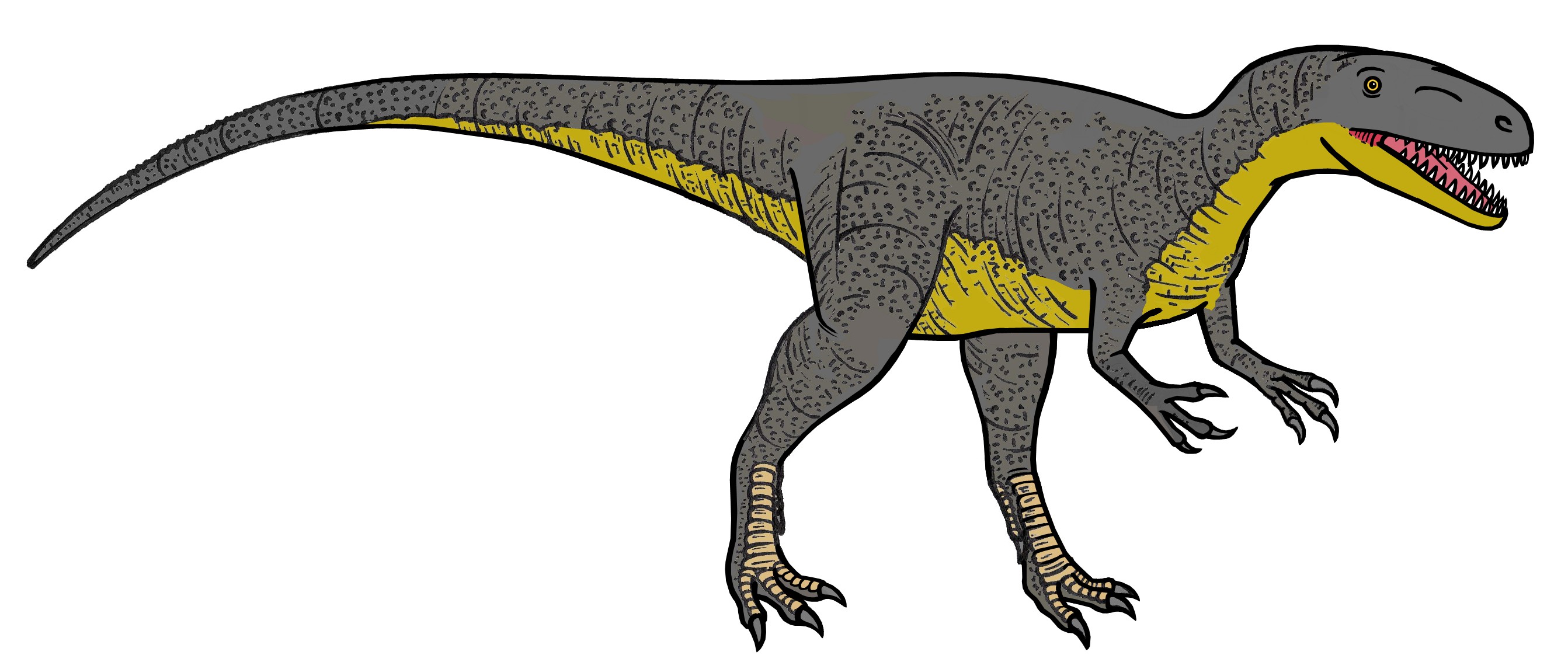
Megalosaurus bucklandii occupies a special place in science as the oldest validly named non-avian dinosaur. William Buckland described giant reptile bones from Oxfordshire in 1824, eighteen years before Richard Owen coined Dinosauria. Modern research has stripped away many fossils historically assigned to the famous name and retains a diagnostic right lower jaw plus compatible material from the Stonesfield area. The result is more scientifically reliable but less complete than the full skeletons often shown in popular art. Megalosaurus was a six-metre predatory tetanuran and a close relative of other megalosaurids, but much of its precise body outline must be reconstructed from those relatives.
Its fossils occur between approximately 168 and 166 million years ago. Values shown here are approximate and reflect the current curated seed dataset.
Form and function
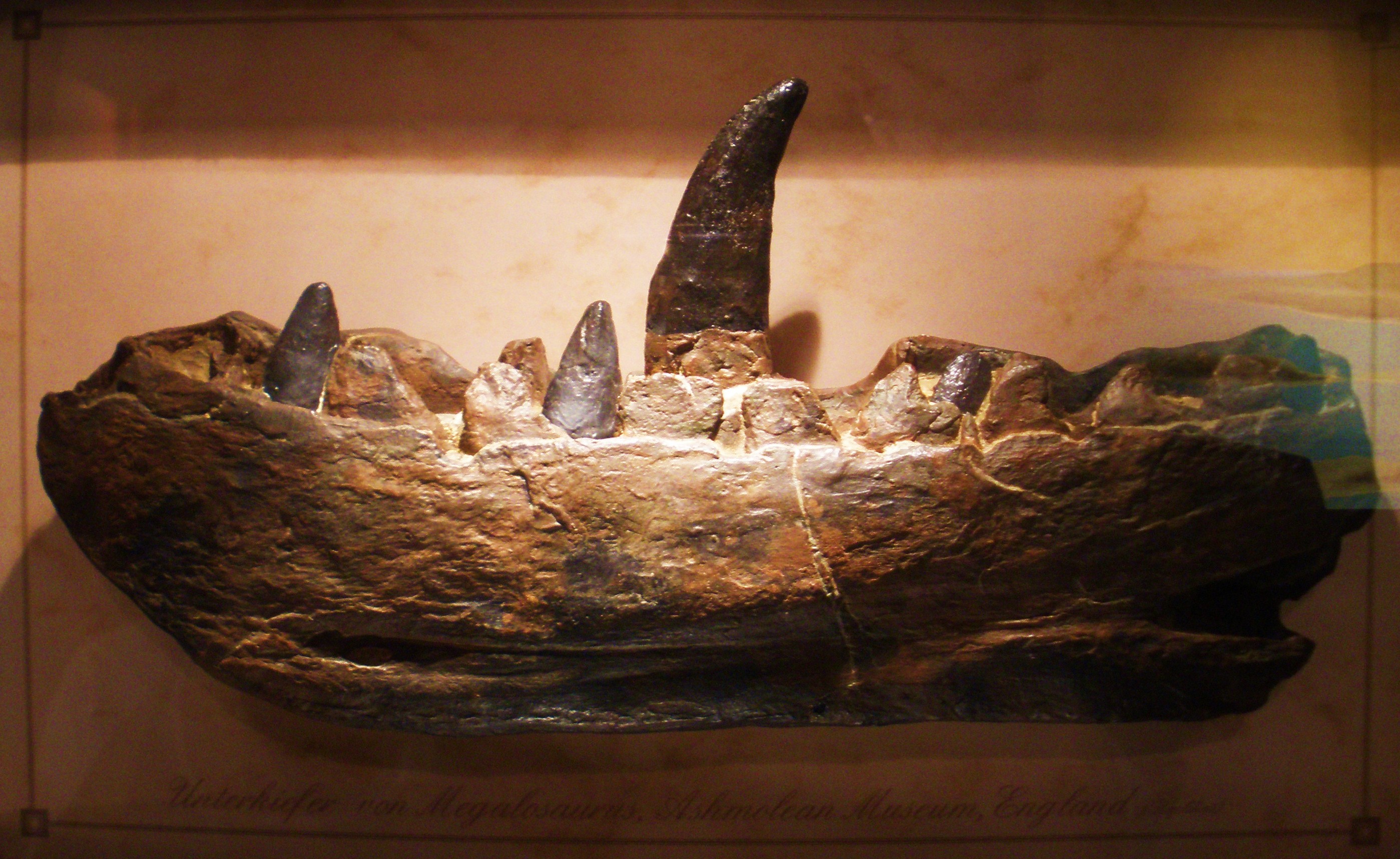
The lectotype OUMNH J.13505 is the rear portion of a robust right dentary containing replacement and erupted teeth. A distinctive longitudinal groove and a narrow opening on its inner surface help diagnose the species. Referred Oxfordshire material includes parts of the skull, vertebral column, shoulder and pelvic girdles, and limbs, but no single articulated skeleton unites them. The teeth were recurved and serrated, the hind limbs supported bipedal locomotion, and close relatives indicate three-fingered grasping hands. Exact skull depth, arm proportions and the full sequence of back and tail vertebrae remain partly reconstructed.
Evolutionary position
This simplified classification path shows one placement from Dinosauria to this species. Each step is clickable, and other analyses may support alternative relationships.
Open interactive positionScale
Simplified length comparison using preferred dataset estimates; body shape and posture are not represented.
Scientific record
Stonesfield quarry workers recovered large fossil bones over many decades. William Buckland began studying the material by about 1818 with help from Mary Morland, whose careful drawings illustrated his 1824 paper. Buckland formally introduced the genus Megalosaurus, meaning great lizard; Gideon Mantell supplied the species name bucklandii in 1827 to honour him. Later authors assigned fragmentary theropod fossils from around the world to Megalosaurus, turning it into a taxonomic wastebasket. Roger Benson's detailed revisions in 2008 and 2010 restricted the valid species to the Oxfordshire type and securely comparable material.
Discovery credit: Stonesfield quarry workers, William Buckland.
Naming authors: William Buckland, Gideon Mantell.
Palaeoenvironment
The Taynton Limestone formed in a warm, shallow coastal setting across low islands and lagoons in Jurassic Oxfordshire. River and storm processes transported terrestrial bones into marine or near-shore sediments, mixing them with shellfish and marine fossils. Megalosaurus therefore lived on nearby land rather than in the sea. Plant-eating dinosaurs and other terrestrial vertebrates occupied the region, although transported isolated bones rarely preserve direct ecological interactions.
Serrated teeth and a large, reinforced lower jaw identify Megalosaurus as a carnivore able to cut flesh from substantial prey or carcasses. Its hind limbs establish bipedal movement, but speed and hunting method cannot be calculated from the incomplete skeleton. No nest, trackway or multi-individual association is securely attributable to M. bucklandii, so claims about pack hunting, territorial display or parental care go beyond the fossil evidence.
Worth knowing
Fossil distribution
Oxfordshire, England, United Kingdom
Taynton Limestone Formation
regional marker
Markers are deliberately approximate. They identify published fossil areas without exposing sensitive excavation coordinates.
Open interactive mapFossil specimen record
Oxford, United Kingdom
Repository and current public display of original lectotype right dentary OUMNH J.13505 and other historic Stonesfield material. A separate displayed jaw replica should not be confused with the original fossil.
A research repository is not necessarily a public exhibit. Loan and display status can change, so check with the institution before visiting.
Media record
Evidence
Roger B. J. Benson · Zoological Journal of the Linnean Society 158(4) · 2010
Open sourceOxford University Museum of Natural History
Open source