Flaming Cliffs (Bayn Dzak)
Gobi Desert, Mongolia
Djadokhta Formation
approximate site marker
Pronunciation: OH-vee-RAP-tor FILL-oh-SERR-ah-tops
A small, toothless and probably feathered Mongolian theropod named as an egg thief after it was found above a nest. Embryos discovered decades later showed that the same egg type belonged to oviraptorids.
Last updated 13 July 2026
Field guide
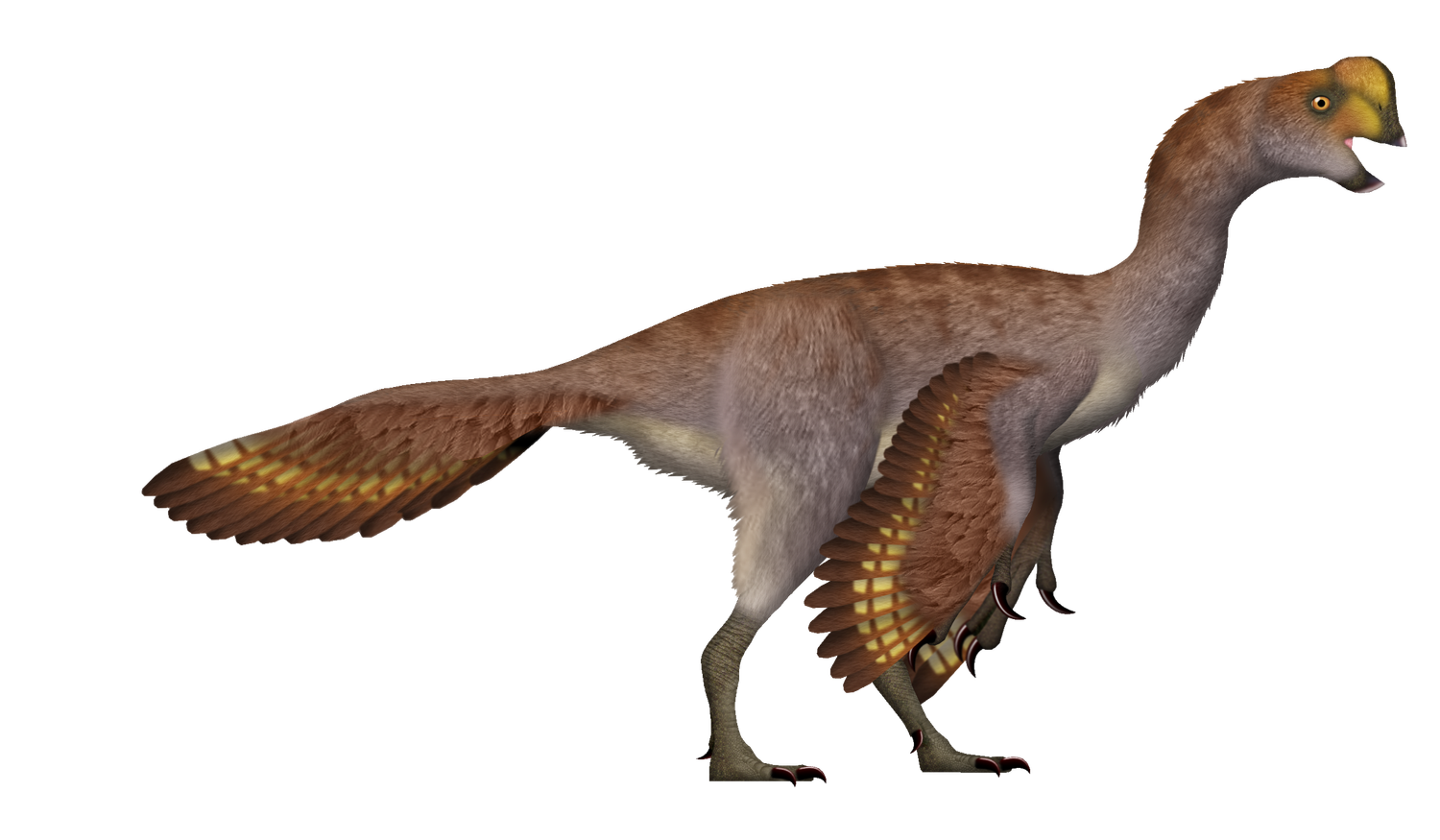
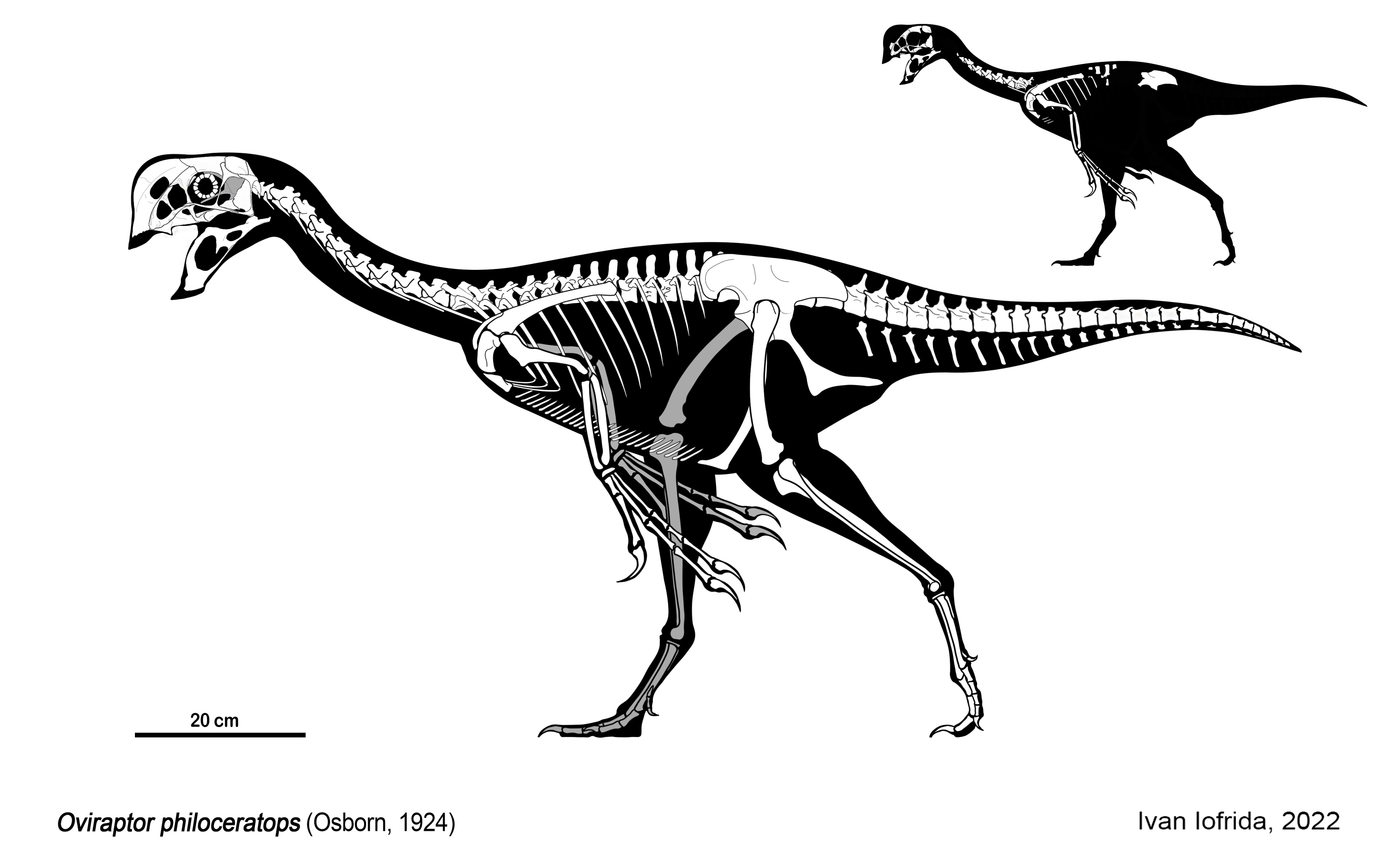
Oviraptor philoceratops was a small oviraptorid theropod from the Djadokhta Formation of Mongolia. Its short, deep and highly air-filled skull ended in a strong toothless beak, while long arms and grasping hands gave it a birdlike silhouette. The species is much less completely known than popular reconstructions imply: only the crushed partial holotype AMNH FR 6517 can be assigned confidently. The tall-crested skeletons and classic spread-wing brooding adults often labeled Oviraptor are mostly specimens of Citipati or other oviraptorids.
Its fossils occur between approximately 75 and 71 million years ago. Values shown here are approximate and reflect the current curated seed dataset.
Form and function
The holotype preserves a badly crushed skull and jaws, part of the neck and trunk, shoulder girdle, furcula, forelimbs and portions of the hands and foot. Its skull was short and deep with a toothless beak and extensive internal air spaces. A large cassowary-like crest is not preserved; the top of the skull is too incomplete to establish its exact profile. Missing hips, hind limbs and tail in full-body restorations are reconstructed mainly from close oviraptorid relatives. Feathers are strongly inferred from feathered and pygostyle-bearing oviraptorosaurs, but no feather impression belongs directly to O. philoceratops.
Evolutionary position
This simplified classification path shows one placement from Dinosauria to this species. Each step is clickable, and other analyses may support alternative relationships.
Open interactive positionScale
Simplified length comparison using preferred dataset estimates; body shape and posture are not represented.
Scientific record
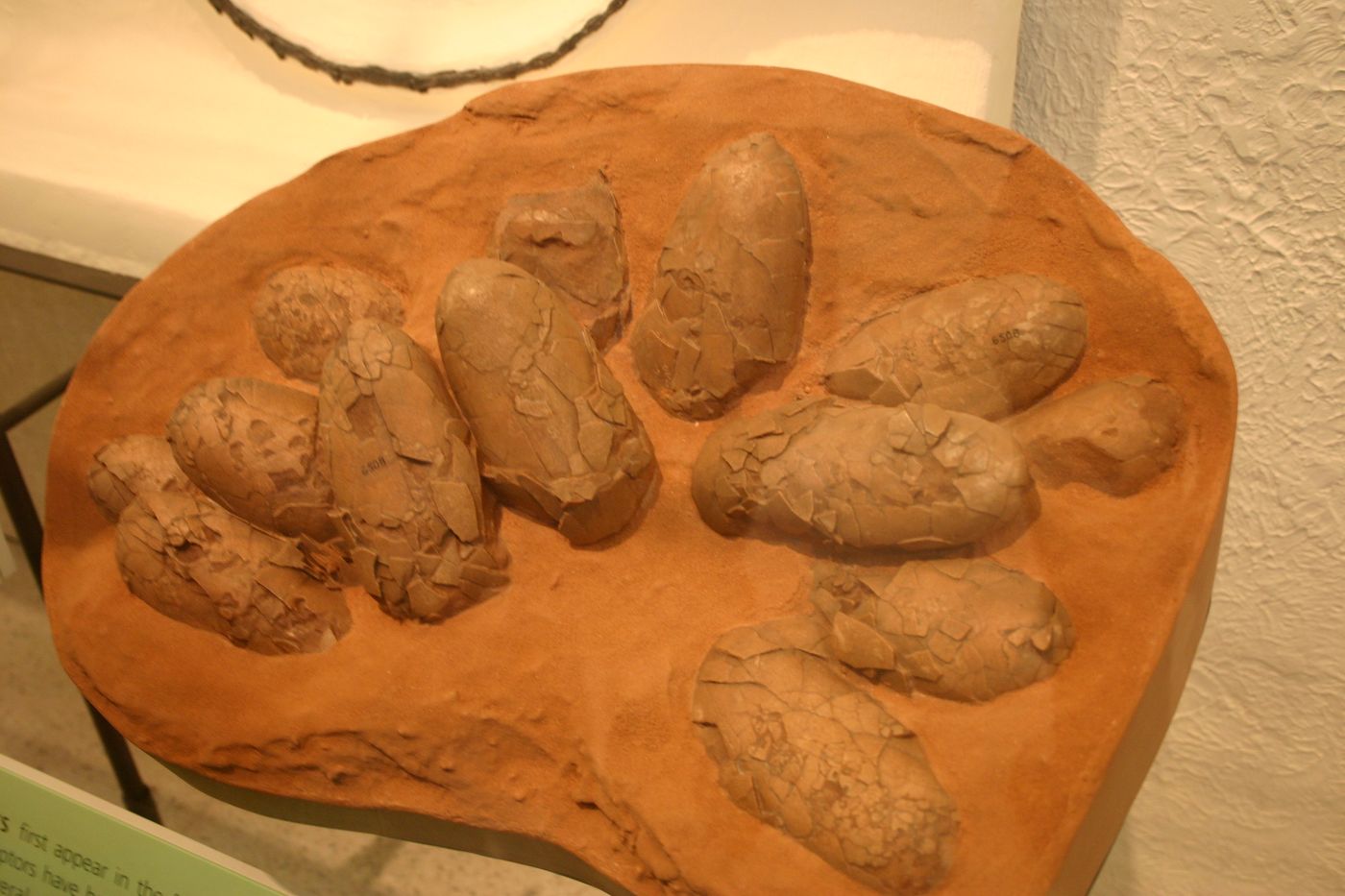
George Olsen found AMNH FR 6517 at Bayn Dzak—the Flaming Cliffs—during Roy Chapman Andrews’s 1923 Central Asiatic Expedition. The skeleton lay directly above egg nest AMNH FR 6508, then thought to belong to the abundant Protoceratops. Henry Fairfield Osborn named Oviraptor philoceratops in 1924, interpreting it as an egg seizer ‘fond of ceratopsian eggs’ while acknowledging the name could prove misleading. In 1994 an embryo inside the same general egg type was identified as an oviraptorid, and later Citipati adults preserved in true brooding postures confirmed birdlike incubation in the family.
Discovery credit: George Olsen, Roy Chapman Andrews.
Naming authors: Henry Fairfield Osborn.
Palaeoenvironment
The Djadokhta Formation preserves a semi-arid landscape of wind-blown dunes, sandy flats and intermittent water sources. Sudden dune collapse and sandstorms could bury animals rapidly. Oviraptor shared the Flaming Cliffs ecosystem with Protoceratops, Velociraptor, small mammals, lizards and other birdlike theropods.
The nest association makes parental attendance a better explanation than specialized egg theft, especially after oviraptorid embryos were found in matching eggs. However, the holotype is not preserved in the classic symmetrical brooding posture seen in later Citipati specimens. Diet remains unresolved: a powerful toothless beak could process tough vegetation, seeds, small animals, shellfish or mixed foods. Current evidence supports herbivory or omnivory more readily than an egg-specialist diet, but it cannot exclude opportunistic egg eating.
Worth knowing
Fossil distribution
Gobi Desert, Mongolia
Djadokhta Formation
approximate site marker
Markers are deliberately approximate. They identify published fossil areas without exposing sensitive excavation coordinates.
Open interactive mapFossil specimen record
New York, United States
Original holotype AMNH FR 6517 and associated nest block AMNH FR 6508 from the 1923 Central Asiatic Expedition. The online collection catalog identifies the partial skull, jaws, vertebrae and limb material preserved in the holotype.
New York, United States
Current cast of the ‘Big Mamma’ nesting oviraptorid. This related specimen is probably Citipati, not O. philoceratops, and is displayed specifically to explain the evidence for birdlike brooding behaviour.
A research repository is not necessarily a public exhibit. Loan and display status can change, so check with the institution before visiting.
Media record
Evidence
Henry Fairfield Osborn · American Museum Novitates 144 · 1924
Open sourceJames M. Clark, Mark A. Norell, Timothy Rowe · American Museum Novitates · 2002
Open sourceMark A. Norell, James M. Clark, Demberelyin Dashzeveg and 6 coauthors · Science · 1994
Open sourceMark A. Norell, James M. Clark, Luis M. Chiappe, Demberelyin Dashzeveg · Nature · 1995
Open sourceAmerican Museum of Natural History, Division of Paleontology
Open sourceAmerican Museum of Natural History
Open sourceAmerican Museum of Natural History
Open source