Flaming Cliffs (Bayn Dzak)
Gobi Desert, Mongolia
Djadokhta Formation
approximate site marker
Pronunciation: veh-LOSS-ih-RAP-tor mon-go-lee-EN-sis
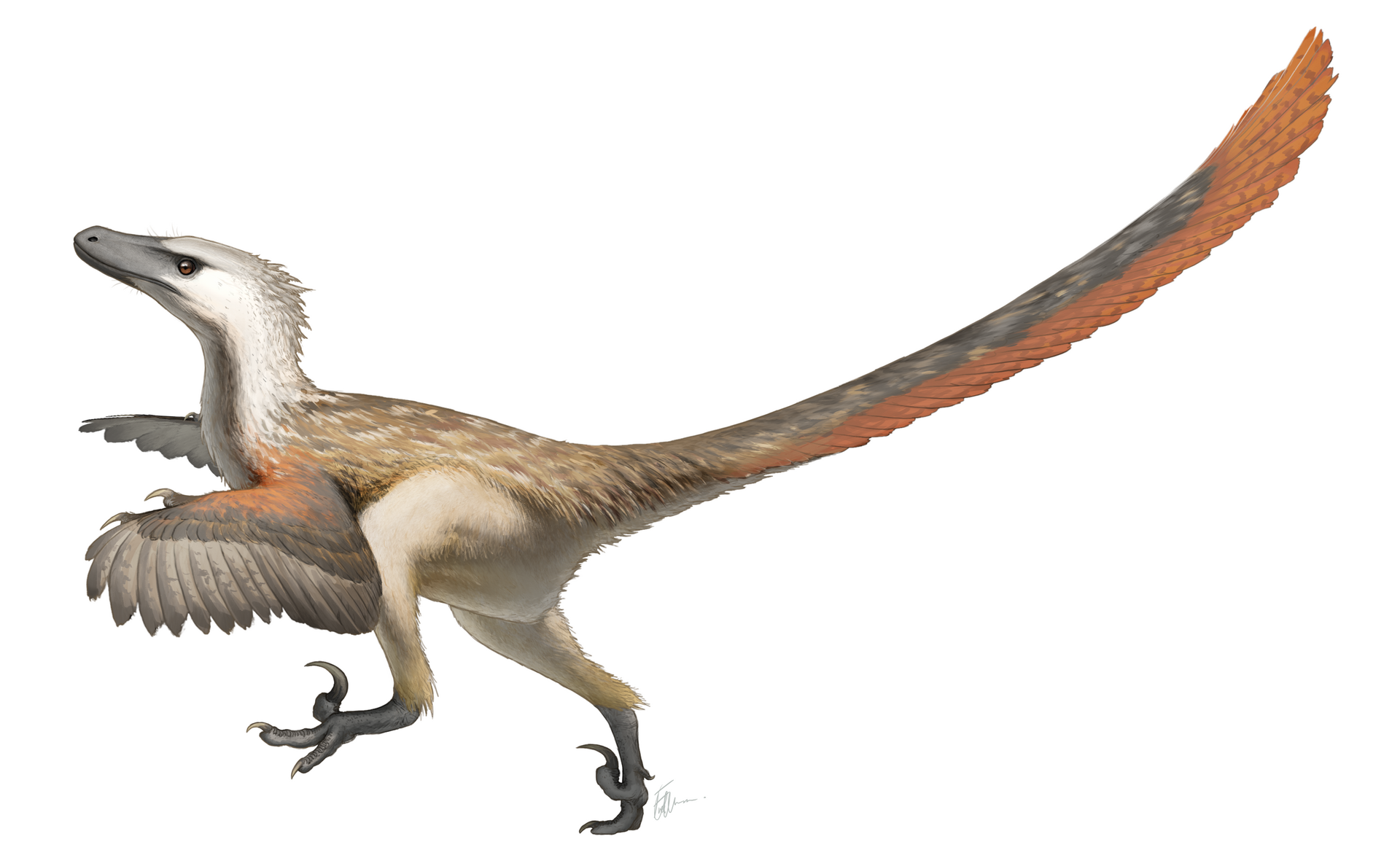
A turkey-sized, fully feathered dromaeosaurid from Mongolia's Late Cretaceous deserts. Its real anatomy includes wing feathers, a long stiffened tail and an enlarged second-toe claw—but not the human-sized, scaly body made famous by films.
Last updated 13 July 2026
Field guide
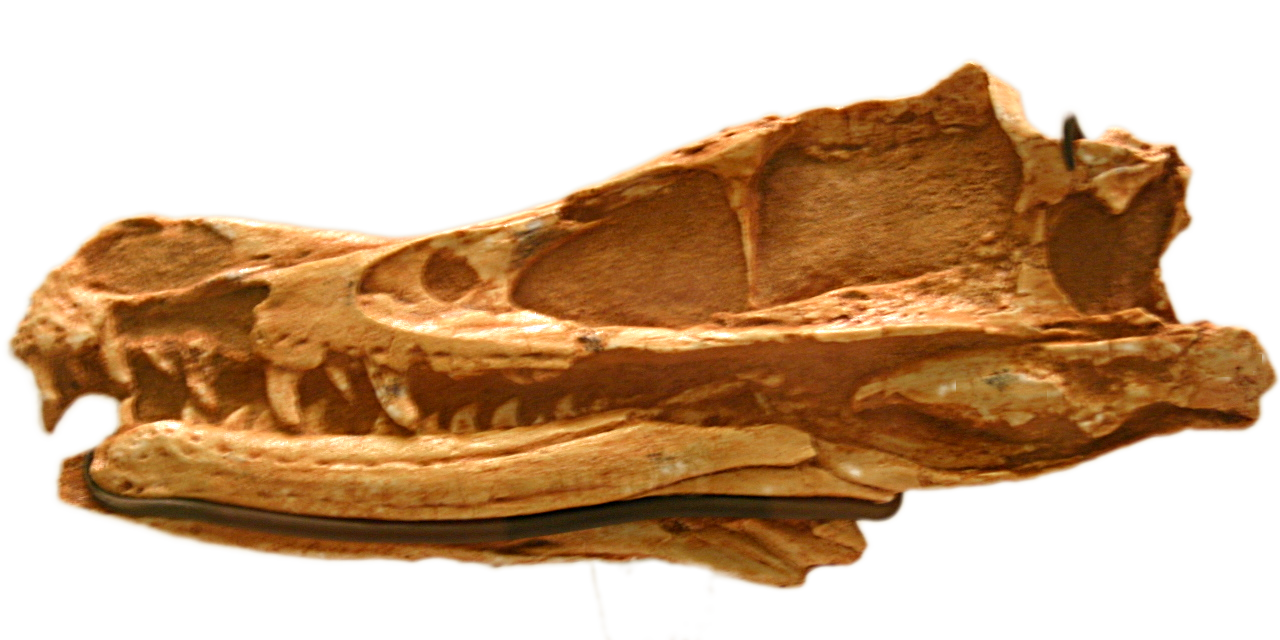
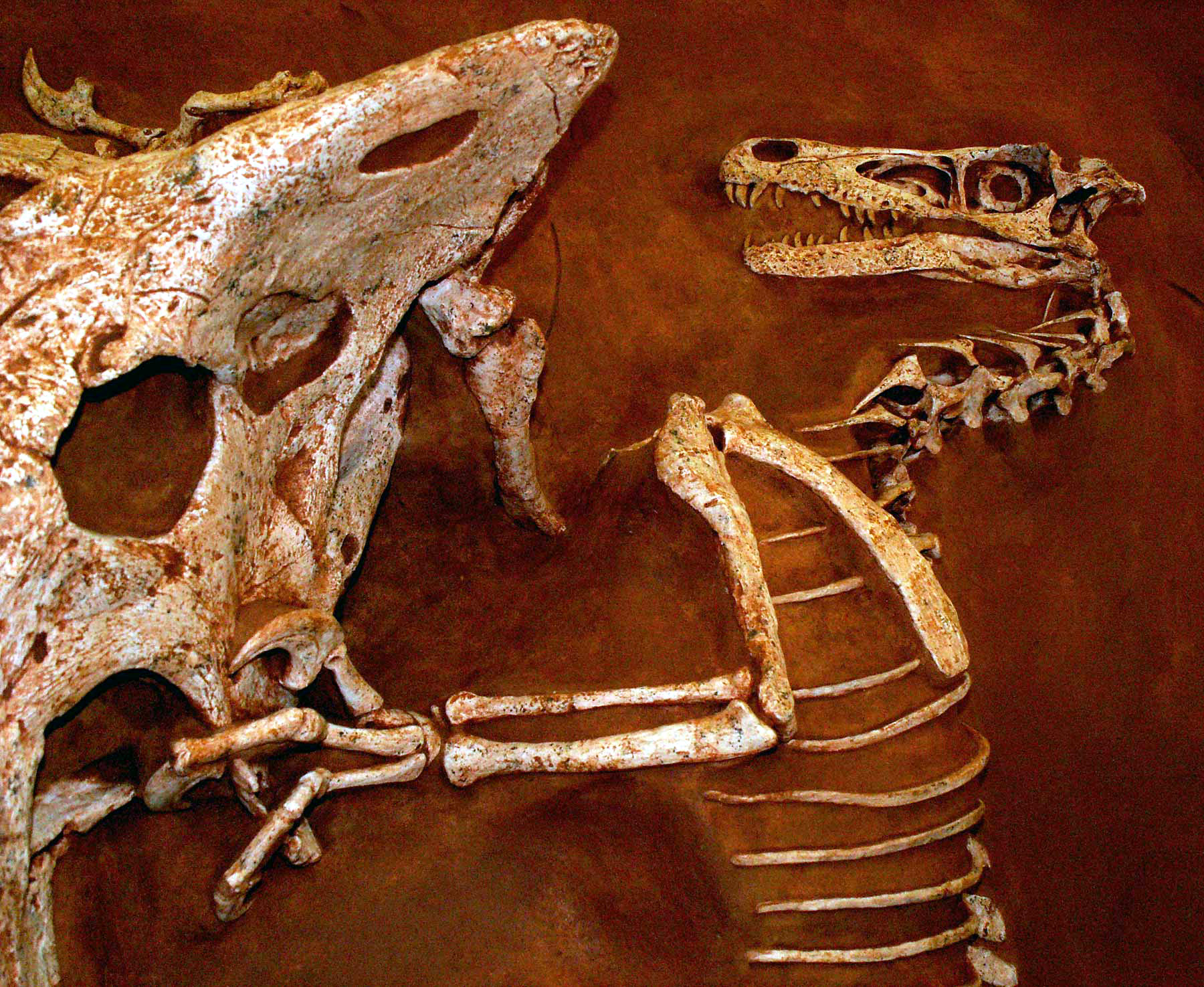
Velociraptor mongoliensis was a lightly built predator of the Djadokhta Formation. It had a long, low skull armed with serrated teeth, grasping three-fingered hands, feathered forelimbs and an enlarged curved claw on each second toe. Quill knobs on a referred forearm demonstrate that large feathers were anchored along the arm. The extraordinary Fighting Dinosaurs pair preserves one Velociraptor entangled with a Protoceratops, providing rare direct evidence of physical interaction between predator and potential prey.
Its fossils occur between approximately 75 and 71 million years ago. Values shown here are approximate and reflect the current curated seed dataset.
Form and function
The animal balanced over two long hind limbs with a tail reinforced by elongated bony rods and overlapping vertebral processes. Each foot bore an enlarged, strongly curved second-toe claw that was normally held clear of the ground. The hands could grasp but could not rotate palm-down in the mammal-like way often shown in old art. Although no Velociraptor fossil preserves a complete feather outline, quill knobs prove long wing feathers, while close relatives support a feathered body and tail.
Evolutionary position
This simplified classification path shows one placement from Dinosauria to this species. Each step is clickable, and other analyses may support alternative relationships.
Open interactive positionScale
Simplified length comparison using preferred dataset estimates; body shape and posture are not represented.
Scientific record
Peter C. Kaisen of the American Museum's Central Asiatic Expedition found the crushed but remarkably complete skull AMNH 6515 at the Flaming Cliffs in 1923. Henry Fairfield Osborn named Velociraptor mongoliensis in American Museum Novitates in 1924. The type specimen also included bones from the foot; the large curved claw was initially interpreted as belonging to the hand, before better dromaeosaurid skeletons clarified that it came from the second toe.
Discovery credit: Peter C. Kaisen.
Naming authors: Henry Fairfield Osborn.
Palaeoenvironment
V. mongoliensis lived in an arid to semi-arid landscape of wind-blown dunes, sandy flats and intermittent water sources. The Djadokhta ecosystem also supported Protoceratops, the small ceratopsian Bagaceratops, oviraptorosaurs, ankylosaurs, lizards and mammals. Sudden sand-rich burial events helped preserve articulated skeletons, eggs and traces of interactions that are rarely recorded elsewhere.
Velociraptor was an active carnivore capable of tackling small vertebrates and interacting violently with Protoceratops. The enlarged toe claw may have helped grip, pin or puncture struggling prey, but the familiar claim that it routinely disembowelled animals is not directly demonstrated. The Fighting Dinosaurs fossil captures physical contact, although burial and post-mortem movement complicate a frame-by-frame reading of the struggle. No V. mongoliensis fossil demonstrates coordinated pack hunting.
Worth knowing
Fossil distribution
Gobi Desert, Mongolia
Djadokhta Formation
approximate site marker
Markers are deliberately approximate. They identify published fossil areas without exposing sensitive excavation coordinates.
Open interactive mapFossil specimen record
New York City, United States
Research repository for original holotype AMNH 6515. The museum's current visitor page also confirms a real Velociraptor fossil skull on Floor 4, but it does not identify the displayed skull by catalogue number; this entry therefore does not claim that the holotype itself is currently on view.
A research repository is not necessarily a public exhibit. Loan and display status can change, so check with the institution before visiting.
Media record
Evidence
Henry Fairfield Osborn · American Museum Novitates 144 · 1924
Open sourceAlan H. Turner, Peter J. Makovicky, Mark A. Norell · Science · 2007
Open sourceRinchen Barsbold · Paleontological Journal · 2016
Open sourceAmerican Museum of Natural History
Open sourceAmerican Museum of Natural History · 2007
Open sourceAmerican Museum of Natural History
Open sourceNatural History Museum, London
Open source