Careless Creek Ranch fossil region
Wheatland County, central Montana, United States
Judith River Formation
regional marker
Pronunciation: AY-vah-SER-ah-tops LAM-er-eye
A comparatively small Montana centrosaurine known from a partial skull and skeleton recovered from an ancient stream deposit.
Last updated 28 July 2026
Field guide
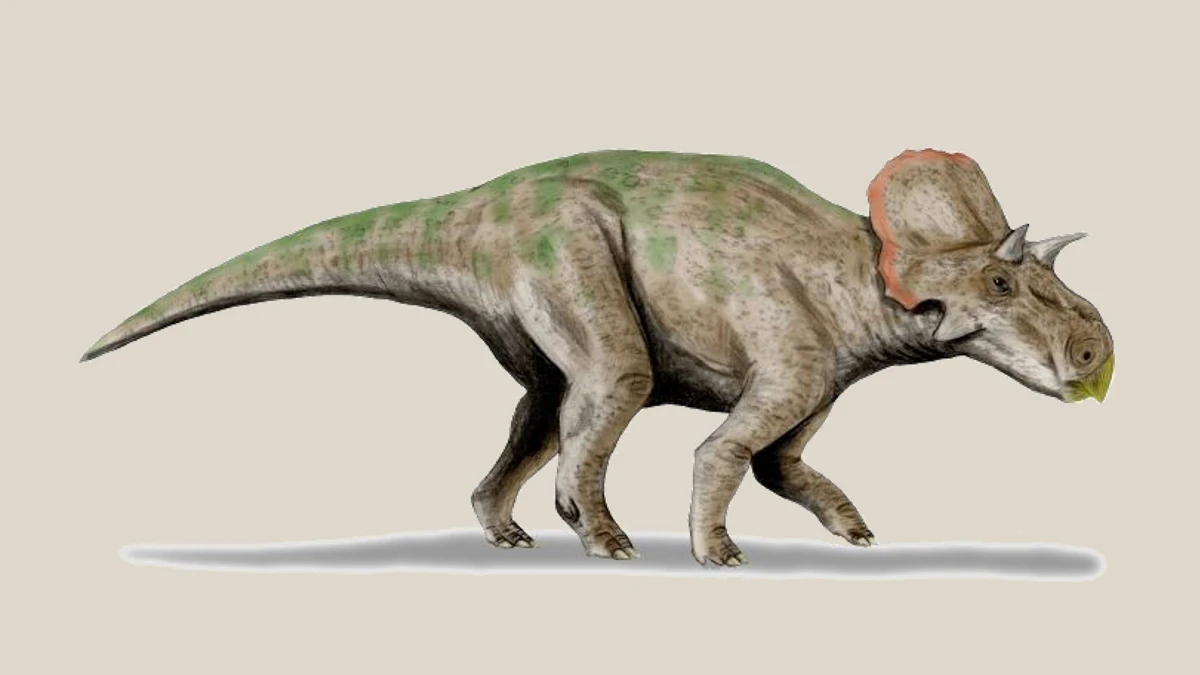
Avaceratops lammersi lived in central Montana during the Campanian. Its holotype is much smaller than most adult ceratopsids and preserves a partial skull plus a substantial disarticulated skeleton. Whether that individual was fully grown remains uncertain. A larger skull referred to Avaceratops suggests the genus may have reached a more typical ceratopsid size, but its assignment is not universally secure.
Its fossils occur between approximately 76.4 and 75.6 million years ago. Values shown here are approximate and reflect the current curated seed dataset.
Form and function
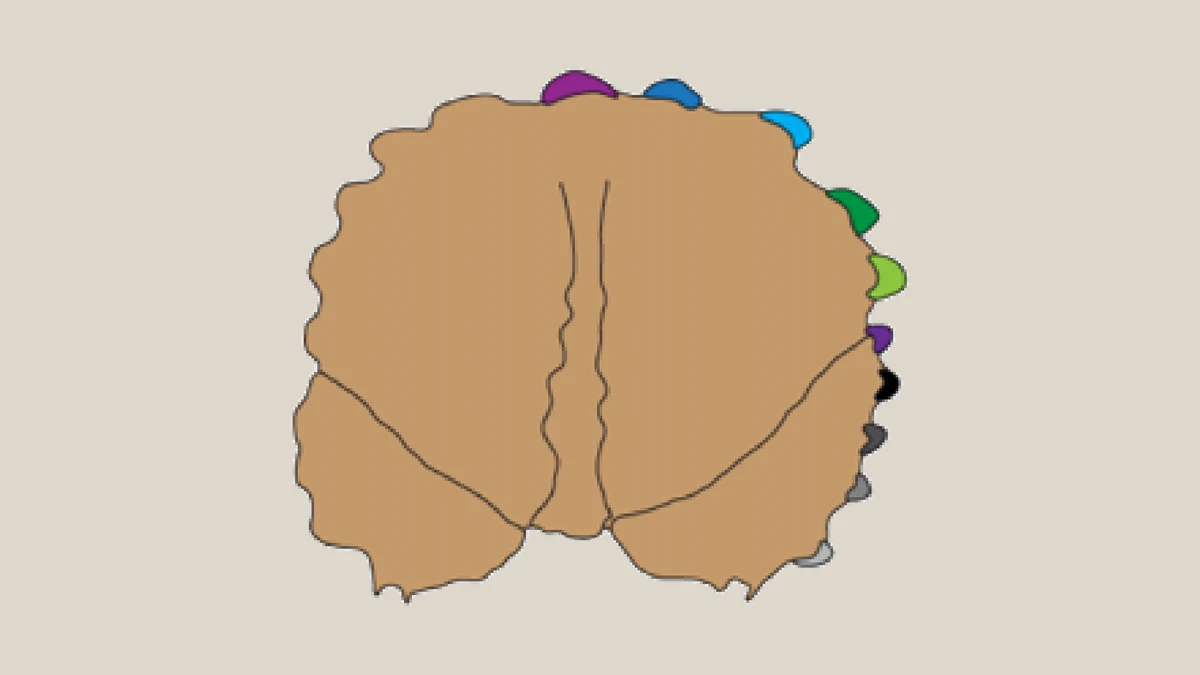
The holotype preserves much of a short, broad frill, jaws, vertebrae and limb bones. Its parietal lacks the large open windows typical of many adult ceratopsids, possibly because the openings were small or closed during growth. The exact nasal and brow-horn arrangement is uncertain: an older hornless restoration is used here, while the referred larger skull has been reconstructed with more developed brow horns. The colour-coded frill diagram shows how recent studies identify its marginal ossification positions.
Evolutionary position
This simplified classification path shows one placement from Dinosauria to this species. Each step is clickable, and other analyses may support alternative relationships.
Open interactive positionScale
Simplified length comparison using preferred dataset estimates; body shape and posture are not represented.
Scientific record
Commercial collector Eddie Cole found the scattered bones at Careless Creek Ranch near Shawmut, Montana, in 1981. Peter Dodson examined the collection that October, returned to the site in 1982 and helped recover more material. He named Avaceratops lammersi in 1986, honouring Cole’s wife Ava and the ranch-owning Lammers family. The holotype ANSP 15800 entered the Academy of Natural Sciences collection in Philadelphia.
Discovery credit: Eddie Cole, Peter Dodson and field team.
Naming authors: Peter Dodson.
Palaeoenvironment
The Judith River Formation records rivers, floodplains, ponds and coastal environments west of the Western Interior Seaway. The Careless Creek animal was scattered through an ancient stream deposit, probably after transport. Vegetation included conifers, flowering plants, ferns and low wetland plants, while hadrosaurs, armoured dinosaurs, other ceratopsians and theropod predators occupied the wider region.
Avaceratops used a beak to crop vegetation and dense cheek teeth to slice it. The frill may have supported species recognition or display, but its external soft tissue is unknown. One scattered skeleton and a referred skull cannot establish social group size. Claims about charging, parental care or herd behaviour therefore go beyond the available evidence.
Worth knowing
Fossil distribution
Wheatland County, central Montana, United States
Judith River Formation
regional marker
Markers are deliberately approximate. They identify published fossil areas without exposing sensitive excavation coordinates.
Open interactive mapFossil specimen record
Philadelphia, United States
Repository of the Avaceratops holotype, a partial skull and disarticulated skeleton. Display availability should be checked before visiting.
Bozeman, United States
Repository of a larger skull referred to Avaceratops in 1999; its assignment remains uncertain.
A research repository is not necessarily a public exhibit. Loan and display status can change, so check with the institution before visiting.
Media record
Evidence
Peter Dodson · Proceedings of the Academy of Natural Sciences of Philadelphia 138(2), 305–317 · 1986
Open sourcePaul Penkalski, Peter Dodson · Journal of Vertebrate Paleontology 19(4), 692–711 · 1999
Open sourceAcademy of Natural Sciences of Drexel University
Open source