Riggs Hill
Colorado, United States
Morrison Formation
approximate site marker
Pronunciation: BRAK-ee-oh-SORE-us al-TITH-oh-raks
A rare, high-shouldered Morrison Formation sauropod named from a partial Colorado skeleton with a huge humerus, deep trunk vertebrae and forelimbs longer than its hind limbs.
Last updated 13 July 2026
Field guide
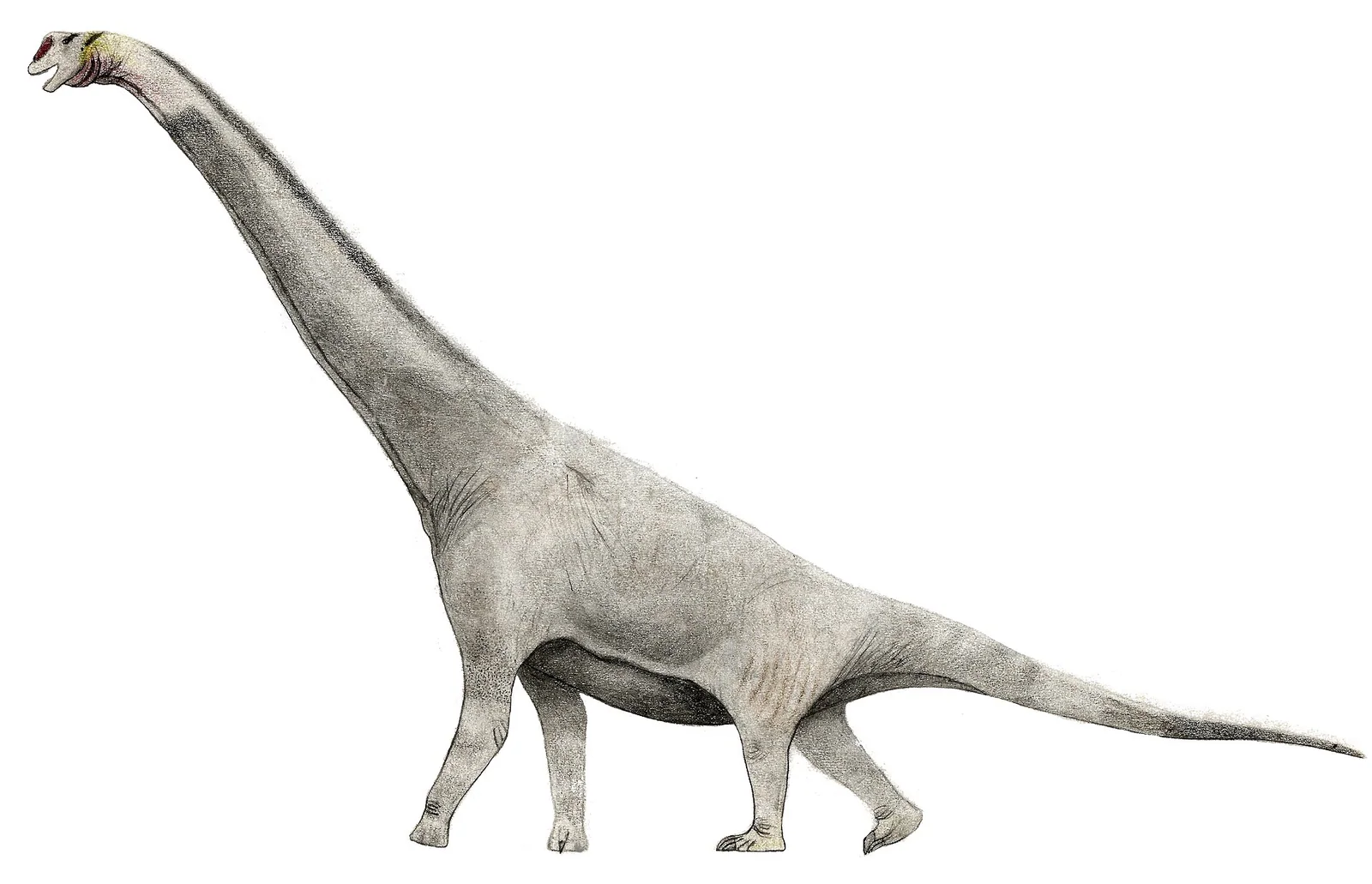
Brachiosaurus altithorax was a gigantic brachiosaurid sauropod from Late Jurassic Colorado. Its defining skeleton, FMNH P 25107, preserves the rear seven trunk vertebrae, sacrum, two front tail vertebrae, ribs and selected shoulder, hip and limb bones—but no skull or neck. The long humerus and proportions of the preserved torso show that the shoulders stood high and that a large share of the animal's mass rested over the forelimbs. Much of the familiar popular image of Brachiosaurus actually comes from the more complete Tanzanian animal formerly called Brachiosaurus brancai and now named Giraffatitan. Separating those genera makes B. altithorax both more anatomically distinctive and much less completely known than its fame suggests.
Its fossils occur between approximately 154 and 150 million years ago. Values shown here are approximate and reflect the current curated seed dataset.
Form and function
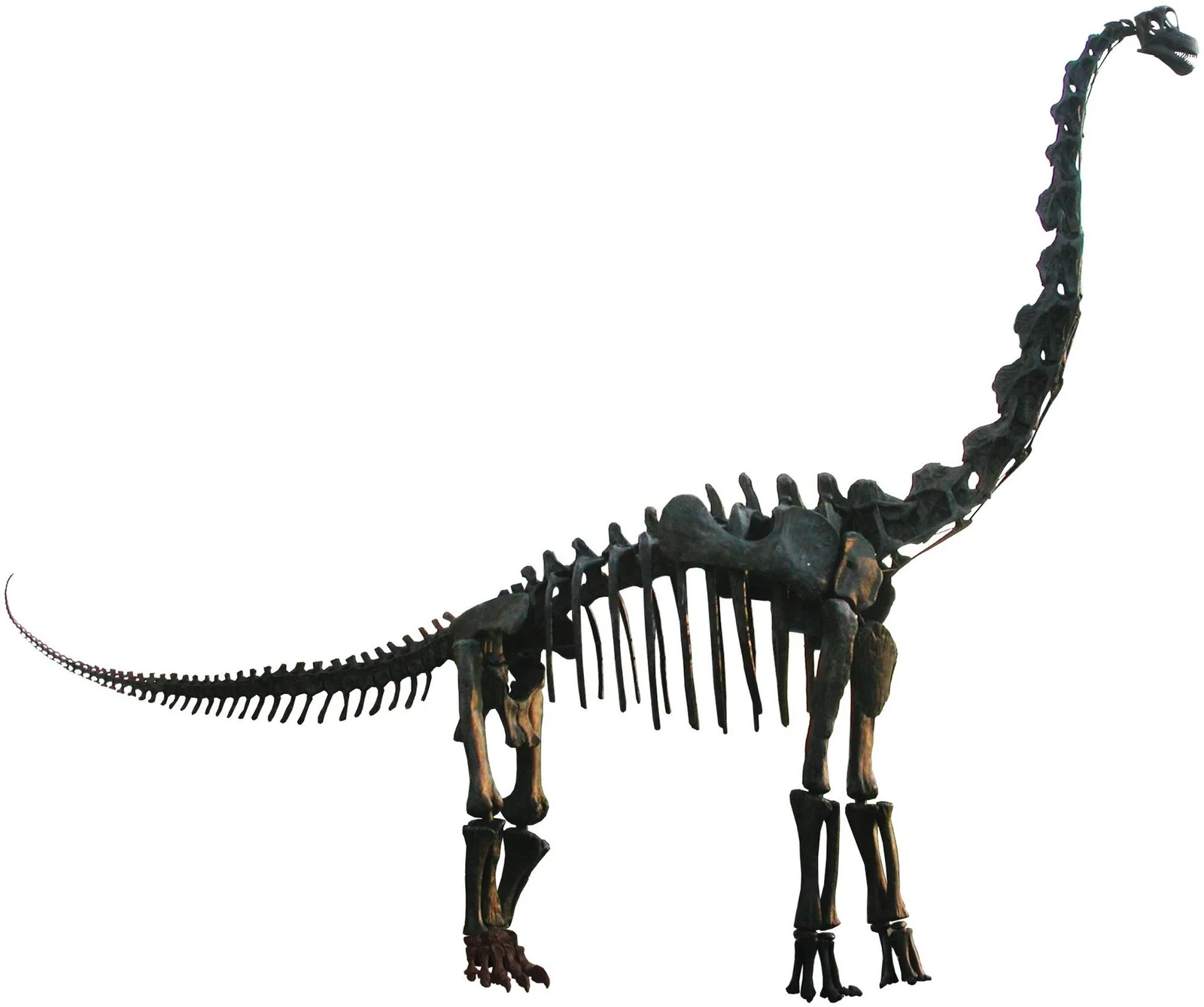
Holotype FMNH P 25107 includes dorsal vertebrae six through twelve, the sacrum, the first two caudal vertebrae, ribs, a left coracoid, right humerus, right ilium and right femur. The humerus is slightly longer than the femur, creating the elevated shoulder line that inspired the name 'arm lizard'. Long, strongly opisthocoelous trunk vertebrae surrounded a deep chest, while air-filled internal spaces reduced skeletal weight. Taylor's 2009 reconstruction inferred a longer, deeper torso and probably a taller, more substantial tail than Giraffatitan. Because the type contains no cervical vertebrae or skull, the exact neck length, head shape and nostril position of B. altithorax are not directly known from its defining specimen.
Evolutionary position
This simplified classification path shows one placement from Dinosauria to this species. Each step is clickable, and other analyses may support alternative relationships.
Open interactive positionScale
Simplified length comparison using preferred dataset estimates; body shape and posture are not represented.
Scientific record
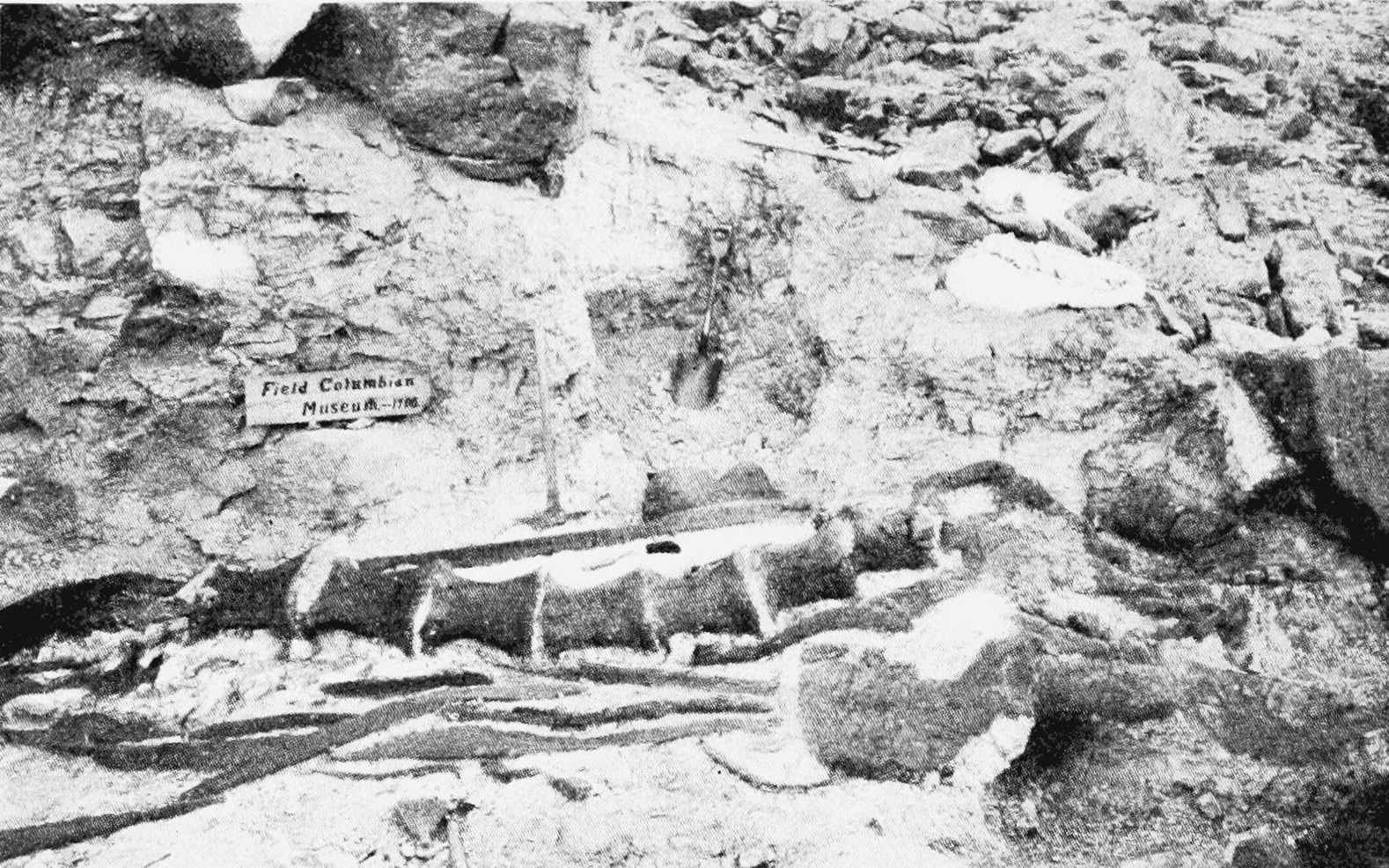
In 1900, Elmer Riggs and H. William Menke of Chicago's Field Columbian Museum excavated a huge partial sauropod skeleton at Quarry 13 near Grand Junction, Colorado. The vertebral column lay inverted and partly articulated before a sandstone lens cut off the front of the carcass. Riggs recognized that the unusually long upper arm exceeded the femur and named Brachiosaurus altithorax in 1903; a detailed monograph followed in 1904. The quarry is now known as Riggs Hill. The original bones remain at the Field Museum, while public full-body mounts combine casts of the holotype with sculpted parts based on Giraffatitan.
Discovery credit: Elmer S. Riggs, H. William Menke.
Naming authors: Elmer S. Riggs.
Palaeoenvironment
Riggs Hill preserves the Brushy Basin Member of the Morrison Formation, deposited across seasonal river floodplains in western Colorado. Sand-rich channels alternated with mud-rich overbank areas, ponds and drier open ground. Conifers, cycads, ferns and horsetails supplied plant food. Brachiosaurus was rare within a community dominated by other sauropods such as Camarasaurus, Apatosaurus and Diplodocus and shared the region with Stegosaurus, small ornithopods and predators including Allosaurus.
Brachiosaurus was a terrestrial quadrupedal herbivore. Its elevated shoulders and inferred long neck made feeding above the normal reach of many Morrison herbivores plausible, but the absent neck and skull prevent a precise feeding-height reconstruction for B. altithorax itself. A tentatively referred skull has broad, spoon-shaped teeth and CT evidence suggests slower tooth replacement than in Camarasaurus or diplodocoids, potentially reflecting a different feeding strategy. No trackway, nest, stomach content or mass assemblage is securely attributable to the species, so gait speed, social structure and preferred plants remain unknown.
Worth knowing
Fossil distribution
Colorado, United States
Morrison Formation
approximate site marker
Markers are deliberately approximate. They identify published fossil areas without exposing sensitive excavation coordinates.
Open interactive mapFossil specimen record
Chicago, United States
Repository of the original partial holotype FMNH P 25107. The museum documents original Brachiosaurus bones in Evolving Planet; its full-body outdoor mount and the related O'Hare mount are plastic composites using holotype casts and Giraffatitan-based replacements.
Fruita, United States
The regional museum helps interpret and maintain the one-mile Riggs Hill trail. Visitors can reach the historic type quarry and see replica vertebrae positioned in the rock; the original holotype is in Chicago.
A research repository is not necessarily a public exhibit. Loan and display status can change, so check with the institution before visiting.
Media record
Evidence
Elmer S. Riggs · American Journal of Science · 1903
Open sourceElmer S. Riggs · Field Columbian Museum Geological Series · 1904
Open sourceMichael P. Taylor · Journal of Vertebrate Paleontology · 2009
Open sourceMichael D. D'Emic, Matthew T. Carrano · The Anatomical Record · 2020
Open sourceField Museum
Open sourceField Museum · 2016
Open sourceJulia McHugh · Museums of Western Colorado
Open source