Como Bluff Quarry 10 region
Albany County, Wyoming, United States
Morrison Formation
regional marker
Pronunciation: BRON-toh-SORE-us ek-SEL-sus
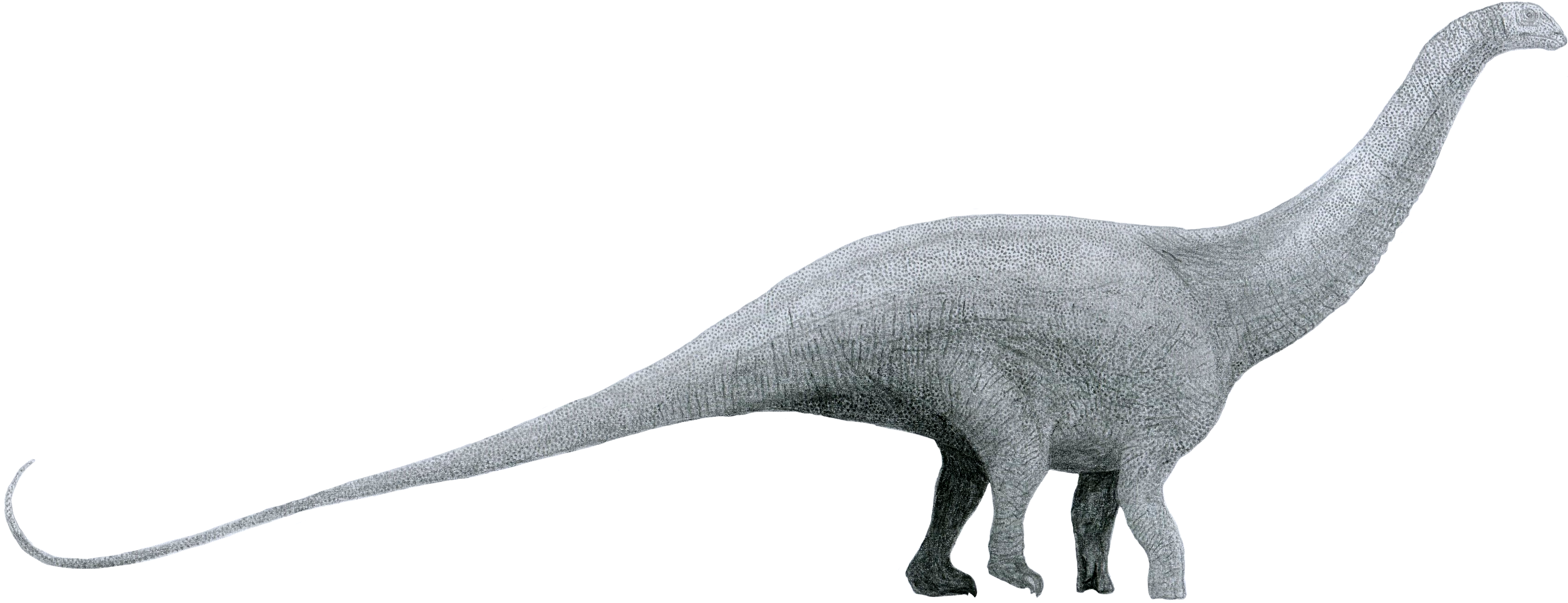
The classic thunder lizard: a robust Late Jurassic diplodocid from Wyoming with a powerful neck, columnar limbs and an exceptionally long tapering tail.
Last updated 16 July 2026
Field guide
Brontosaurus excelsus is both an iconic sauropod and a lesson in how scientific names change. Othniel Charles Marsh named it in 1879 from a largely complete skeleton found at Como Bluff, Wyoming. In 1903 Elmer Riggs judged Brontosaurus insufficiently different from the earlier-named Apatosaurus, so the species became Apatosaurus excelsus for more than a century. A large specimen-by-specimen analysis by Emanuel Tschopp, Octavio Mateus and Roger Benson in 2015 recovered enough consistent differences to recognise Brontosaurus again. That proposal is influential and used here, but the boundary between two closely related genera remains a taxonomic judgement rather than a newly discovered animal.
Its fossils occur between approximately 154 and 150 million years ago. Values shown here are approximate and reflect the current curated seed dataset.
Form and function
Brontosaurus combined a small diplodocid head with a long, exceptionally deep and muscular neck. Robust cervical vertebrae, broad limb bones and a deep shoulder region gave it a heavier build than Diplodocus. The forelimbs were slightly shorter than the hind limbs, while the hands formed near-vertical weight-bearing columns with a large thumb claw. Its tail contained many vertebrae and narrowed into a flexible whip-like tip. The holotype did not preserve a skull, so the head on a complete reconstruction must be informed by closely related apatosaurines rather than by YPM 1980 itself.
Evolutionary position
This simplified classification path shows one placement from Dinosauria to this species. Each step is clickable, and other analyses may support alternative relationships.
Open interactive positionScale
Simplified length comparison using preferred dataset estimates; body shape and posture are not represented.
Scientific record
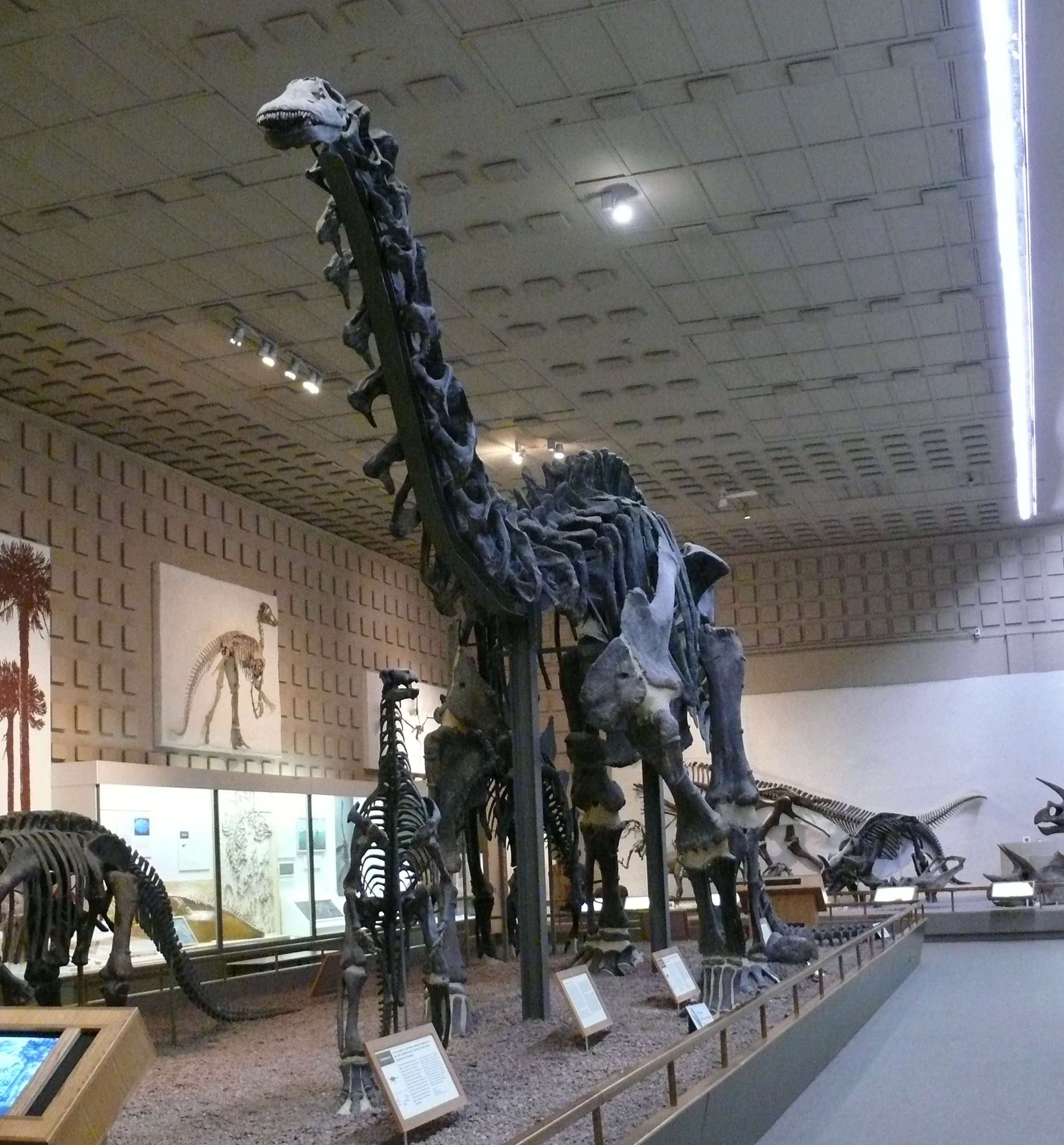
William Harlow Reed found the holotype YPM 1980 at Quarry 10 near Como Bluff in 1879 during the intensely competitive Bone Wars. Marsh named Brontosaurus excelsus later that year; the species name refers to the elevated or noble character of the enormous animal. The skeleton was mounted at Yale with reconstructed missing parts, including a historically inaccurate head, and became one of the world's best-known dinosaur displays. Yale's renovated Burke Hall now presents a substantially revised mount with an anatomically appropriate skull, 27 newly modelled vertebrae and a raised tail. The 2015 diplodocid revision returned the holotype to the genus Brontosaurus after its long classification as Apatosaurus excelsus.
Discovery credit: William Harlow Reed, Yale Peabody field crew.
Naming authors: Othniel Charles Marsh.
Palaeoenvironment
The Morrison Formation records seasonally dry floodplains crossed by rivers and dotted with wetlands, gallery forests and open fern-rich areas. Brontosaurus shared this broad ecosystem with other sauropods, stegosaurs, small ornithopods and predators including Allosaurus and Ceratosaurus. These animals occur across a formation deposited over millions of years, so a formation-level species list is not evidence that every taxon met at one place and time.
Brontosaurus cropped plants with simple peg-like teeth and swallowed vegetation without chewing it into small pieces. Its high daily food requirement probably encouraged steady movement among feeding patches. The powerful neck and tail could have played roles in defence, display or competition, but no fossil records a specific strike or neck-combat behaviour. Trackways show that sauropods sometimes moved in groups, yet no trackway can presently be assigned securely to B. excelsus or demonstrate a permanent herd structure.
Worth knowing
Fossil distribution
Albany County, Wyoming, United States
Morrison Formation
regional marker
Markers are deliberately approximate. They identify published fossil areas without exposing sensitive excavation coordinates.
Open interactive mapFossil specimen record
New Haven, Connecticut, United States
A rebuilt public mount centred on partial original holotype YPM VP 001980. Missing elements are reconstructed, and the renovated presentation adds 27 vertebrae, an appropriate diplodocid skull and an elevated tail; it is not one completely original articulated skeleton.
A research repository is not necessarily a public exhibit. Loan and display status can change, so check with the institution before visiting.
Media record
Evidence
Emanuel Tschopp, Octavio Mateus, Roger B. J. Benson · PeerJ 3 · 2015
Open sourceYale Peabody Museum
Open source