Como Bluff Quarry 13 region
Albany County, Wyoming, United States
Morrison Formation
regional marker
Pronunciation: KAM-ah-rah-SORE-us LEN-tus
A robust Morrison Formation sauropod with a blunt box-like skull, spoon-shaped teeth and one of the most complete articulated sauropod skeletons ever found.
Last updated 16 July 2026
Field guide
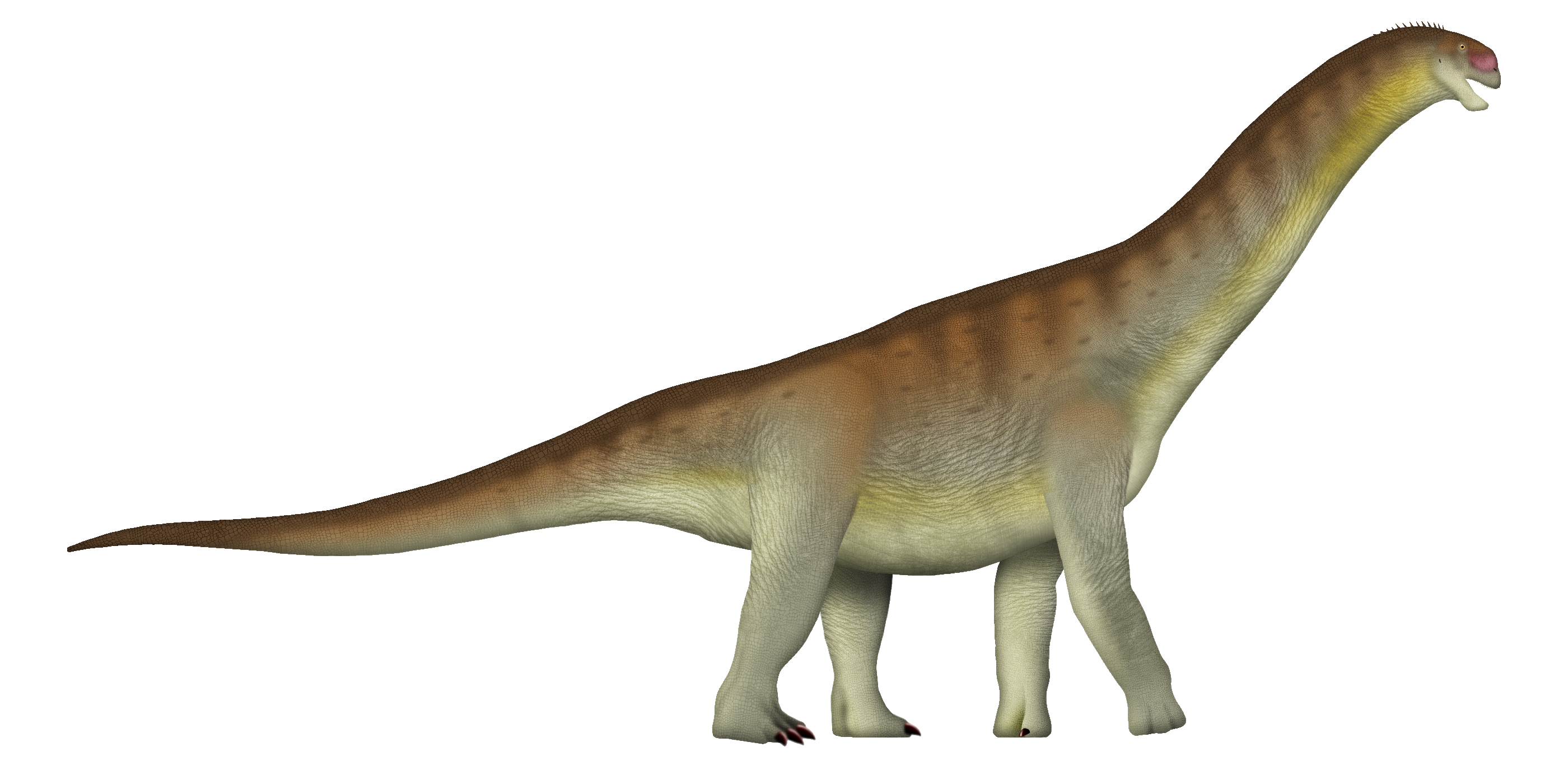
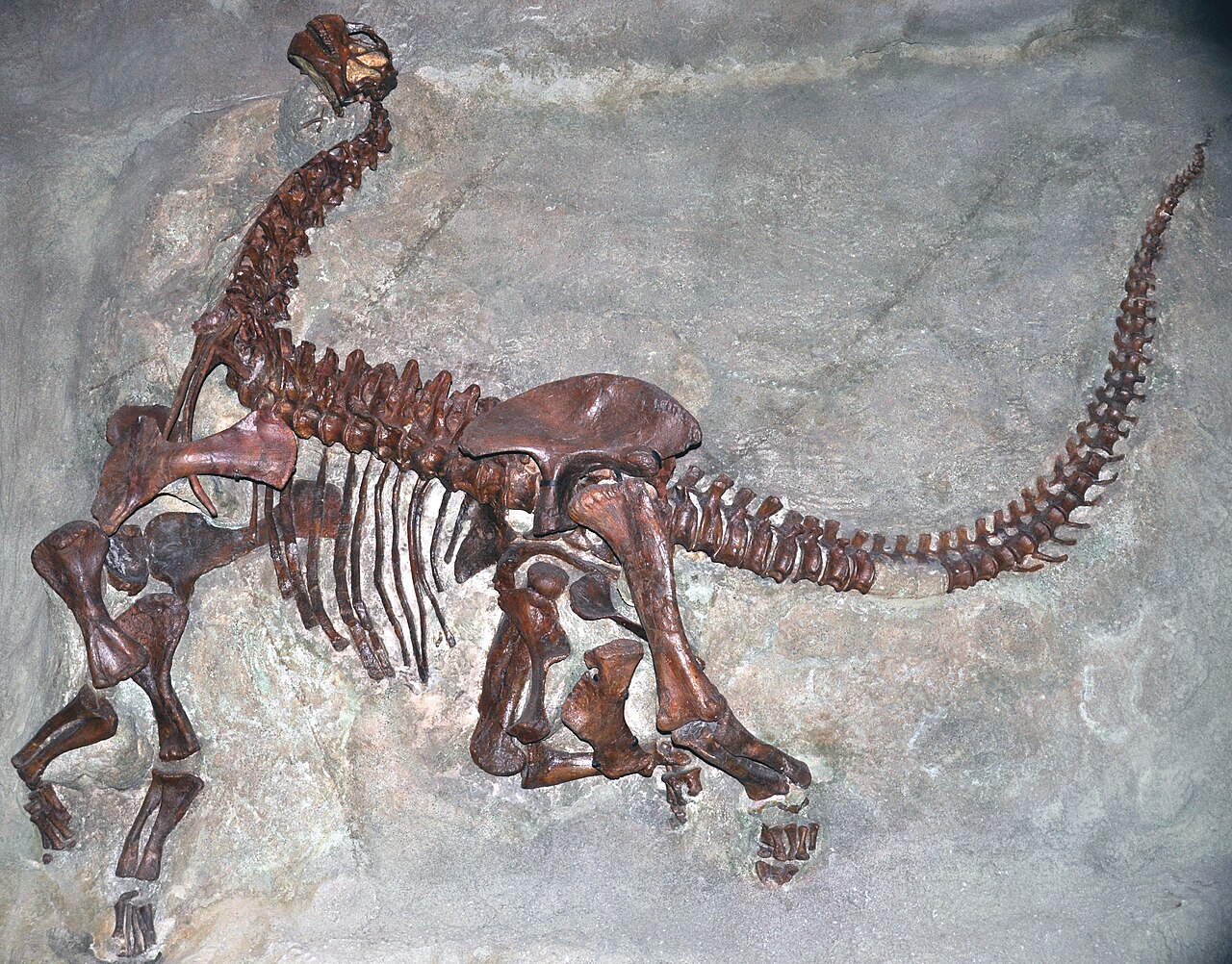
Camarasaurus lentus was a medium-sized but massively built sauropod of the Late Jurassic American West. Compared with Diplodocus, it had a shorter neck and tail, a deeper torso and a much taller, blunt skull. Large spoon-shaped teeth extended along the front of its jaws and were suited to cropping relatively resistant vegetation. The juvenile skeleton CM 11338 is exceptional: its skull and most of its body remained articulated, giving scientists an unusually reliable map of how sauropod bones connected. Adult size still has to be estimated from larger, less complete individuals.
Its fossils occur between approximately 154 and 150 million years ago. Values shown here are approximate and reflect the current curated seed dataset.
Form and function
The skull was short, high and box-shaped, with a large nasal opening and robust jaws. Fleshy nostrils probably opened near the front of the snout rather than at the top of the bony opening. Broad spatulate teeth had thick enamel and show wear from plant processing. The neck contained large air-filled chambers that inspired the genus name while reducing skeletal weight. Forelimbs and hind limbs were columnar, the hands formed compact weight-bearing arcs, and the tail was shorter and heavier than the whip-like tail of diplodocids.
Evolutionary position
This simplified classification path shows one placement from Dinosauria to this species. Each step is clickable, and other analyses may support alternative relationships.
Open interactive positionScale
Simplified length comparison using preferred dataset estimates; body shape and posture are not represented.
Scientific record
Othniel Charles Marsh named Camarasaurus lentus in 1889 from a partial juvenile skeleton, YPM 1910, collected at Quarry 13 near Como Bluff, Wyoming. The species was initially placed in Morosaurus before that genus was recognised as synonymous with Camarasaurus. Earl Douglass uncovered the far more complete juvenile CM 11338 at Carnegie Quarry in Dinosaur National Monument in 1914. Charles Gilmore's 1925 monograph described its articulated skull and skeleton, allowing one of the first whole-body sauropod reconstructions based substantially on a single individual.
Discovery credit: Como Bluff field crews, Earl Douglass.
Naming authors: Othniel Charles Marsh.
Palaeoenvironment
The Morrison Formation preserves broad seasonal floodplains crossed by rivers and dotted with wetlands, gallery forests and open fern-rich areas. Camarasaurus is one of its most common sauropods and occurred alongside diplodocids, brachiosaurids, stegosaurs, ornithopods and large theropods. The formation spans a large region and several million years, so these animals did not all occupy one uniform community.
Camarasaurus used its strong teeth to crop plants and swallowed food with limited oral processing. Tooth wear and replacement provide direct feeding evidence, but preferred plant species remain uncertain. Juvenile and adult fossils show substantial changes in proportions during growth. Trackways demonstrate group movement in some sauropods, yet no trackway can be assigned securely to C. lentus. Its neck could reach a range of feeding heights, but a permanently upright giraffe-like posture is not required by the joints.
Worth knowing
Fossil distribution
Albany County, Wyoming, United States
Morrison Formation
regional marker
Dinosaur National Monument, Utah, United States
Morrison Formation
regional marker
Markers are deliberately approximate. They identify published fossil areas without exposing sensitive excavation coordinates.
Open interactive mapFossil specimen record
Pittsburgh, Pennsylvania, United States
Original near-complete articulated juvenile skull and skeleton collected at Carnegie Quarry and displayed in its sandstone matrix. It is a referred specimen that reveals anatomy exceptionally well, not holotype YPM 1910.
A research repository is not necessarily a public exhibit. Loan and display status can change, so check with the institution before visiting.
Media record
Evidence
Charles W. Gilmore · Memoirs of the Carnegie Museum 10(3) · 1925
Open sourceU.S. National Park Service
Open source