Dinosaur Provincial Park fossil region
Southern Alberta, Canada
Oldman Formation
regional marker
Pronunciation: kor-OH-no-SORE-us BRINK-man-eye
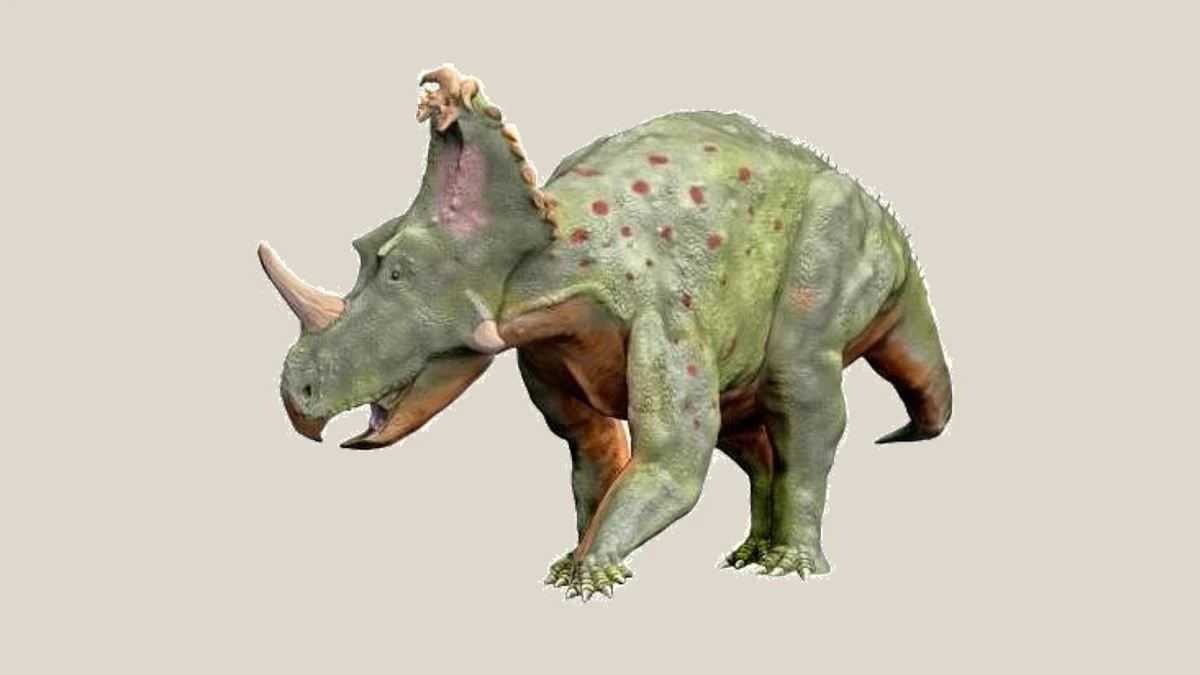
An Alberta centrosaurine whose frill carried a crown-like cluster of extra ossifications and short spikes.
Last updated 28 July 2026
Field guide
Coronosaurus brinkmani lived on the coastal plain of southern Alberta during the middle Campanian. Hundreds of disarticulated bones from two bonebeds document multiple growth stages, especially changes in the skull ornaments. It was named Centrosaurus brinkmani in 2005, but a 2012 phylogenetic study separated it into Coronosaurus because it was more closely allied with Styracosaurus than with Centrosaurus apertus.
Its fossils occur between approximately 77 and 76 million years ago. Values shown here are approximate and reflect the current curated seed dataset.
Form and function
The rear frill carried curved P1 ornaments, blade-like P2 processes and outward-projecting P3 spikes. Numerous accessory ossifications developed along the rear parietal bar, creating the crown-like appearance behind the genus name. Short brow horns changed orientation during growth, and the nasal region bore a low ornament rather than the long spike of Styracosaurus. The bonebeds preserve many cranial and body elements, though no single complete articulated skeleton.
Evolutionary position
This simplified classification path shows one placement from Dinosauria to this species. Each step is clickable, and other analyses may support alternative relationships.
Open interactive positionScale
Simplified length comparison using preferred dataset estimates; body shape and posture are not represented.
Scientific record
Royal Tyrrell Museum field crews excavated Oldman Formation bonebeds in southern Alberta, including BB 138 in Dinosaur Provincial Park, between the mid-1990s and 2000. Michael Ryan and Anthony Russell named the material Centrosaurus brinkmani in 2005; the species honours palaeontologist Donald Brinkman. Ryan, David Evans and Kieran Shepherd established Coronosaurus in 2012, referring to the extra frill ornaments as a crown.
Discovery credit: Royal Tyrrell Museum Field Experience Program.
Naming authors: Michael J. Ryan, Anthony P. Russell.
Palaeoenvironment
The Oldman Formation records rivers and seasonally dry floodplains inland from the Western Interior Seaway. Coronosaurus shared the broader ecosystem with hadrosaurs, armoured dinosaurs, small herbivores and tyrannosaurid predators. DinoTree marks the broad Dinosaur Provincial Park region rather than the precise BB 138 quarry.
The bonebeds show that many individuals accumulated together, although floods, drought or repeated transport could create such deposits without proving permanent herds. The elaborate frill changed during growth and was likely visually important. Its beak and dental batteries processed plants, while exact diet, social display and defensive use of the ornaments remain unobserved.
Worth knowing
Fossil distribution
Southern Alberta, Canada
Oldman Formation
regional marker
Markers are deliberately approximate. They identify published fossil areas without exposing sensitive excavation coordinates.
Open interactive mapFossil specimen record
Drumheller, Canada
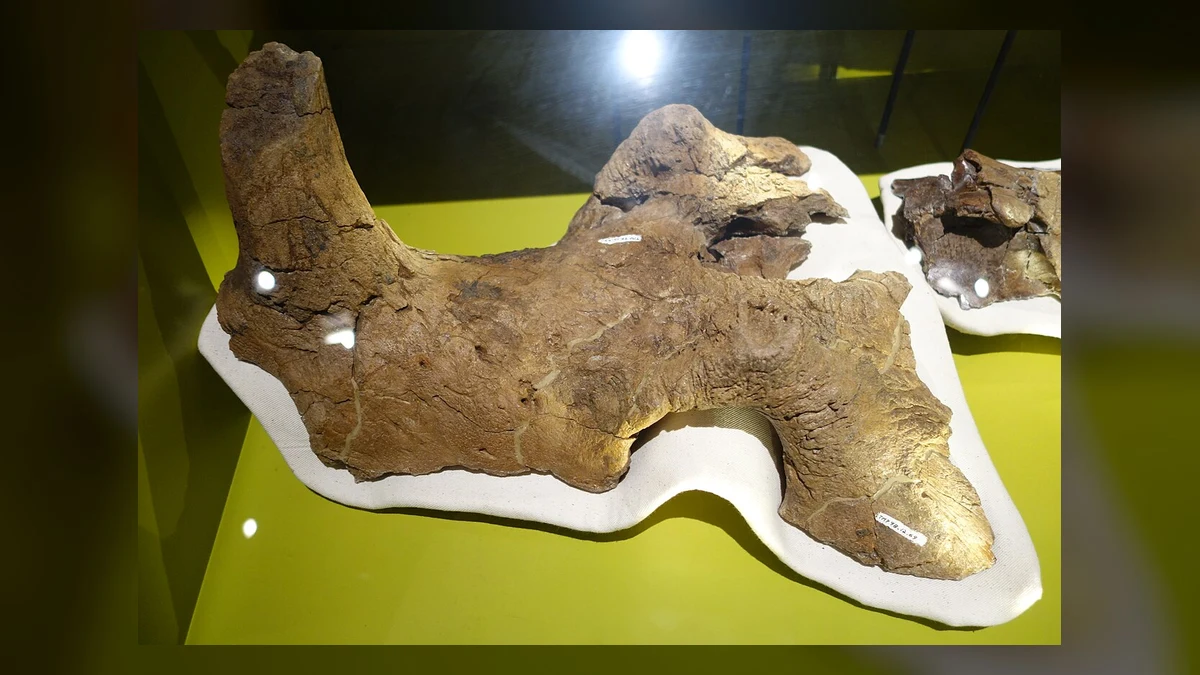
Repository of holotype TMP 2002.68.1 and extensive referred bonebed material. Some skull material has been displayed under the older name Centrosaurus brinkmani.
A research repository is not necessarily a public exhibit. Loan and display status can change, so check with the institution before visiting.
Media record
Evidence
Michael J. Ryan, Anthony P. Russell · Canadian Journal of Earth Sciences 42(7), 1369–1387 · 2005
Open sourceMichael J. Ryan, David C. Evans, Kieran M. Shepherd · Canadian Journal of Earth Sciences 49(11), 1251–1262 · 2012
Open sourceRoyal Tyrrell Museum of Palaeontology
Open source