Loma Prieta fossil area
General Cepeda Municipality, Coahuila, Mexico
Cerro del Pueblo Formation
approximate site marker
Pronunciation: MEK-see-DRAY-kon lon-JIM-ah-nus
A long-handed ornithomimid from northern Mexico whose metacarpals were unusually longer than its metatarsals, known from one headless partial skeleton.
Last updated 16 July 2026
Field guide
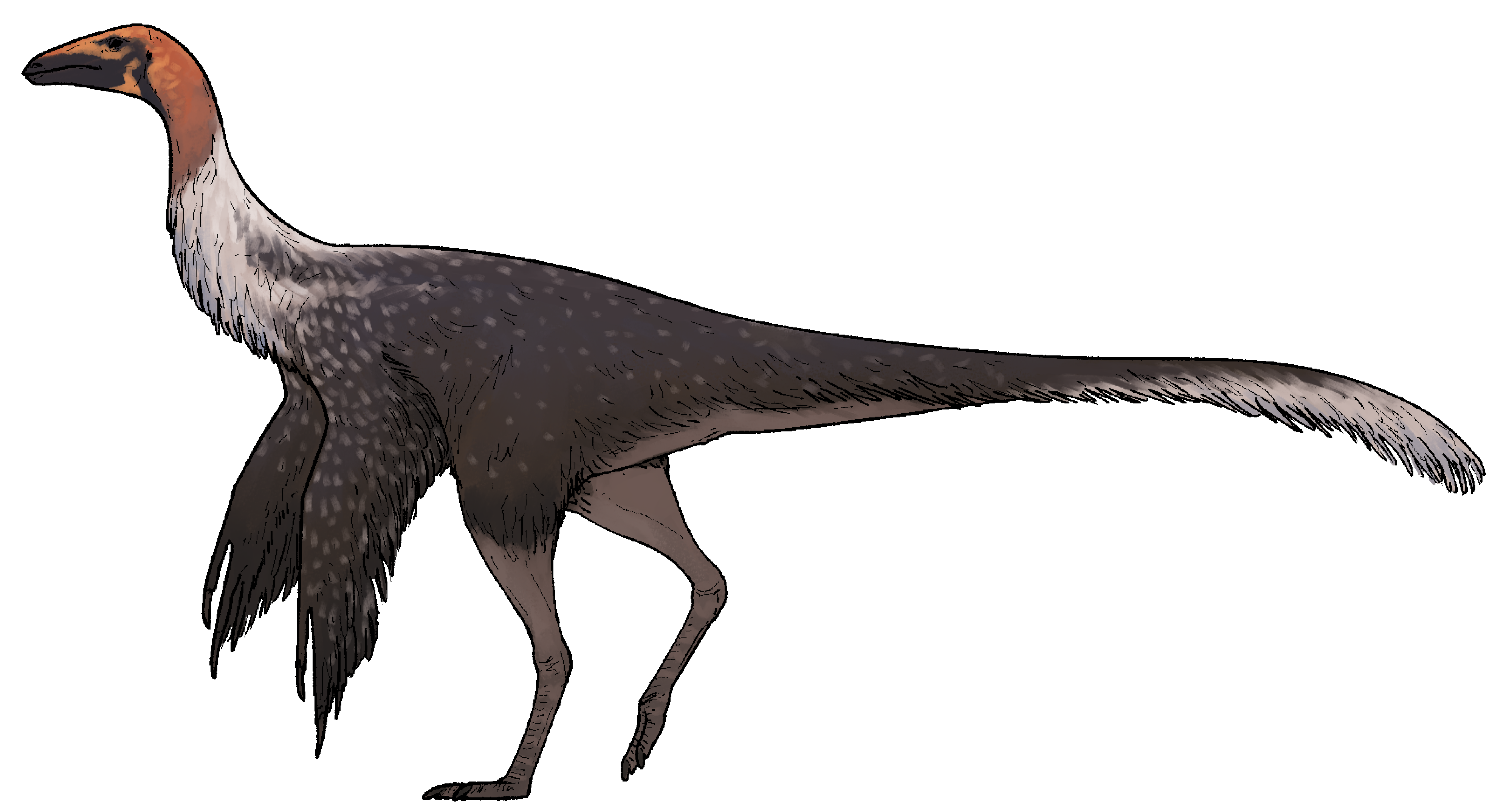
Mexidracon longimanus is an ornithomimid from the Cerro del Pueblo Formation of Coahuila. Its most striking feature is extreme lengthening of the metacarpals: the palm bones exceeded the foot's metatarsals in length, a proportion not documented in other ornithomimids. A partial skeleton preserves vertebrae, forelimb, pelvis and hind limbs but no skull, so the familiar ostrich-dinosaur head in artwork is reconstructed from relatives. Phylogenetic analysis places the species within Ornithomimidae but could not resolve its closest relationships.
Its fossils occur between approximately 73 and 72 million years ago. Values shown here are approximate and reflect the current curated seed dataset.
Form and function
Holotype BENC 32/2-0001 includes dorsal, sacral and tail vertebrae, chevrons, a left humerus, metacarpals I-III, pelvic bones and portions of both hind limbs and feet. The three metacarpals are exceptionally elongated and exceed the metatarsals, producing a remarkably long palm. The femur is slightly longer than the tibia, while the foot has the pinched central metatarsal characteristic of an arctometatarsalian structure. No skull, teeth, fingers beyond limited elements or complete tail are known.
Evolutionary position
This simplified classification path shows one placement from Dinosauria to this species. Each step is clickable, and other analyses may support alternative relationships.
Open interactive positionScale
Simplified length comparison using preferred dataset estimates; body shape and posture are not represented.
Scientific record
Claudio de Leon-Davila discovered the skeleton in 2014 at Loma Prieta near Porvenir de Jalpa in General Cepeda Municipality, Coahuila. The specimen was prepared and deposited at the Benemerita Escuela Normal de Coahuila. Claudia Ines Serrano-Branas and six colleagues named it in January 2025. Mexi refers to Mexico, dracon derives from Greek for dragon, and the Latin longimanus means long-handed.
Discovery credit: Claudio de Leon-Davila.
Naming authors: Claudia Ines Serrano-Branas, Belinda Espinosa-Chavez, Claudio de Leon-Davila and 4 coauthors.
Palaeoenvironment
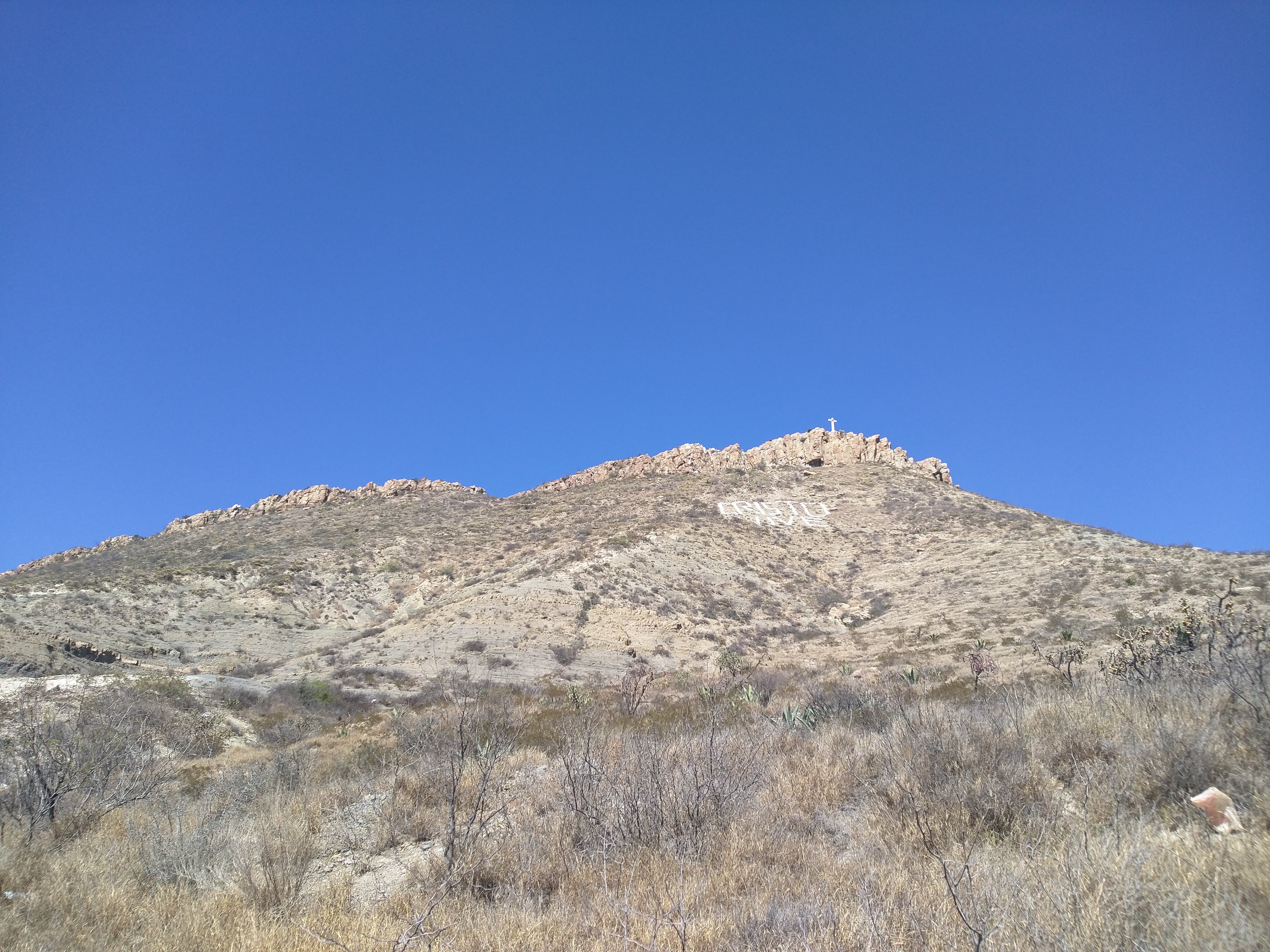
The Cerro del Pueblo Formation accumulated on coastal lowlands beside the retreating Western Interior Seaway. Rivers, estuaries, lagoons and floodplains shifted across a humid landscape, and marine or brackish invertebrates occur with terrestrial fossils in parts of the unit. The modern landscape photograph illustrates an exposure near Saltillo, not the type quarry or a literal reconstruction of the Campanian habitat.
Ornithomimids are often reconstructed as omnivores or selective herbivores, but Mexidracon lacks a skull and has no preserved gut contents. The elongated palms may have broadened the reach of the forelimbs. Gathering vegetation, digging, handling small prey and display have all been suggested as possibilities, yet no muscle model, wear trace or direct evidence presently selects one function.
Worth knowing
Fossil distribution
General Cepeda Municipality, Coahuila, Mexico
Cerro del Pueblo Formation
approximate site marker
Markers are deliberately approximate. They identify published fossil areas without exposing sensitive excavation coordinates.
Open interactive mapFossil specimen record
Saltillo, Mexico
Permanent repository of the original partial axial, forelimb, pelvic and hind-limb skeleton. Curation is documented by the describing paper; continuous public display is not confirmed.
A research repository is not necessarily a public exhibit. Loan and display status can change, so check with the institution before visiting.
Media record
Evidence
Claudia Ines Serrano-Branas, Belinda Espinosa-Chavez, Claudio de Leon-Davila and 4 coauthors · Cretaceous Research 169 · 2025
Open sourceEl Pais Mexico · 2025
Open source