Phu Noi fossil locality
Kham Muang District, Kalasin Province, Thailand
Lower Phu Kradung Formation
approximate site marker
Pronunciation: OO-rah-gah-SORE-us kah-lah-sin-EN-sis
Thailand's first formally named mamenchisaurid sauropod, known only from one distinctive, internally air-filled anterior back vertebra from the latest Jurassic.
Last updated 16 July 2026
Field guide
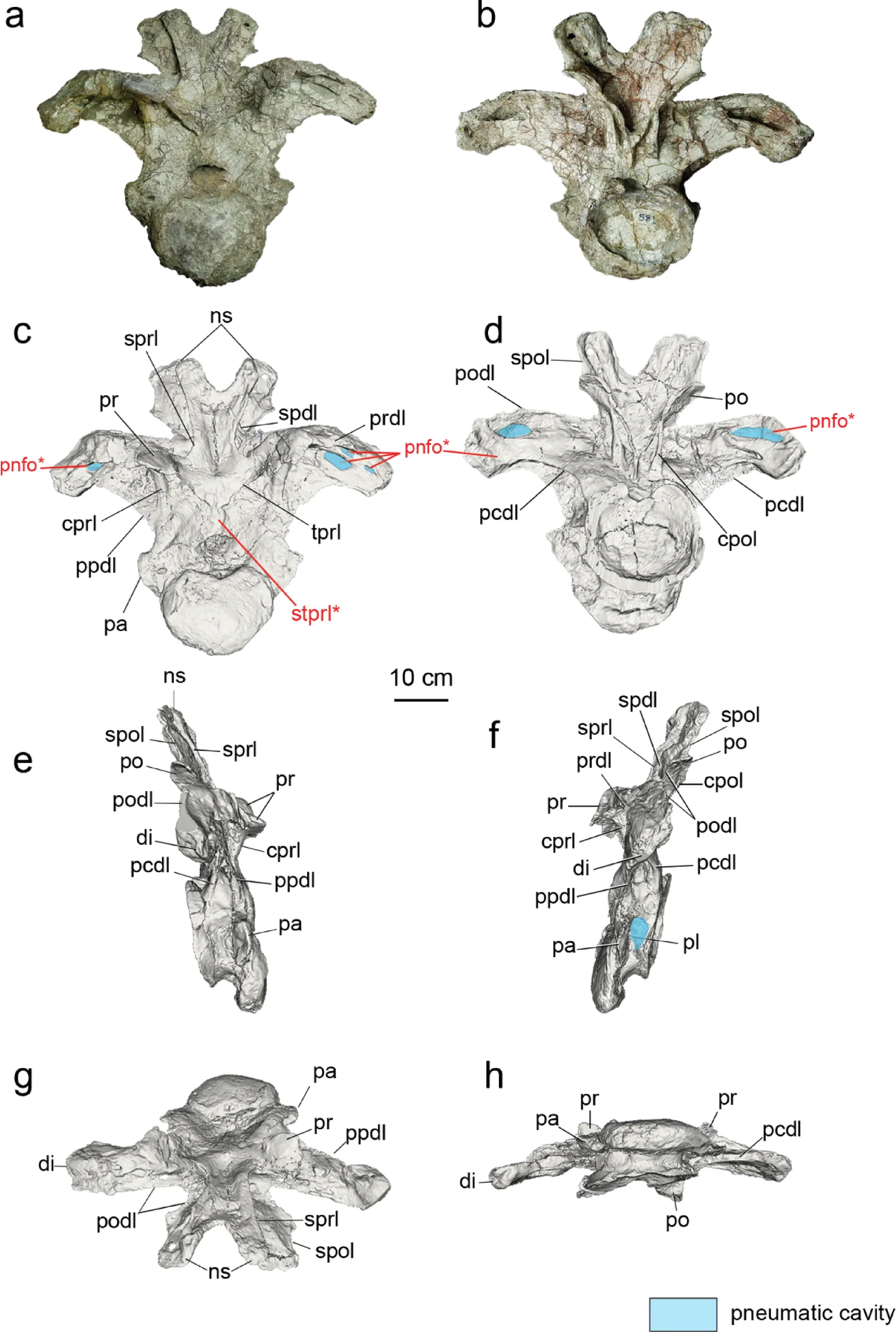
Uragasaurus kalasinensis is an early-diverging mamenchisaurid identified from a single anterior dorsal vertebra from northeastern Thailand. The bone's external ridges, deep pneumatic recesses and honeycomb-like internal structure provide a diagnostic combination even though the rest of the animal is unknown. Phylogenetic analyses place it among the long-necked Asian mamenchisaurids and extend the family's named record into Thailand. Other sauropod bones occur at Phu Noi, but the describing authors did not refer them to Uragasaurus because they were not found in direct association with the holotype.
Its fossils occur between approximately 150 and 145.2 million years ago. Values shown here are approximate and reflect the current curated seed dataset.
Form and function
Holotype PRC 460 is a compressed but well-preserved anterior dorsal vertebra. A Y-shaped arrangement of vertebral laminae, prominent teardrop-shaped pneumatic fossae and a subtriangular pleurocoel distinguish it from close relatives. CT slices reveal extensive camellate, or small-chambered, internal pneumaticity. No skull, neck, limbs, tail or body outline can presently be assigned to the species.
Evolutionary position
This simplified classification path shows one placement from Dinosauria to this species. Each step is clickable, and other analyses may support alternative relationships.
Open interactive positionScientific record
The holotype was recovered at Phu Noi near Ban Din Chi in Kham Muang District, Kalasin Province, from the lower Phu Kradung Formation. Apirut Nilpanapan, Sita Manitkoon, Varavudh Suteethorn and Komsorn Lauprasert named it in July 2026. The specimen is curated at Mahasarakham University's Palaeontological Research and Education Centre. Uraga is Sanskrit for serpent, alluding to the long neck typical of mamenchisaurids, while kalasinensis honours Kalasin Province.
Naming authors: Apirut Nilpanapan, Sita Manitkoon, Varavudh Suteethorn, Komsorn Lauprasert.
Palaeoenvironment
The lower Phu Kradung Formation records rivers, floodplains and palaeochannels in a continental basin. Sandstone, siltstone and mudstone at Phu Noi have also yielded fishes, lungfish, turtles, crocodile-line reptiles and small ornithischian dinosaurs. The broad latest-Jurassic age is better supported than a precise stage assignment.
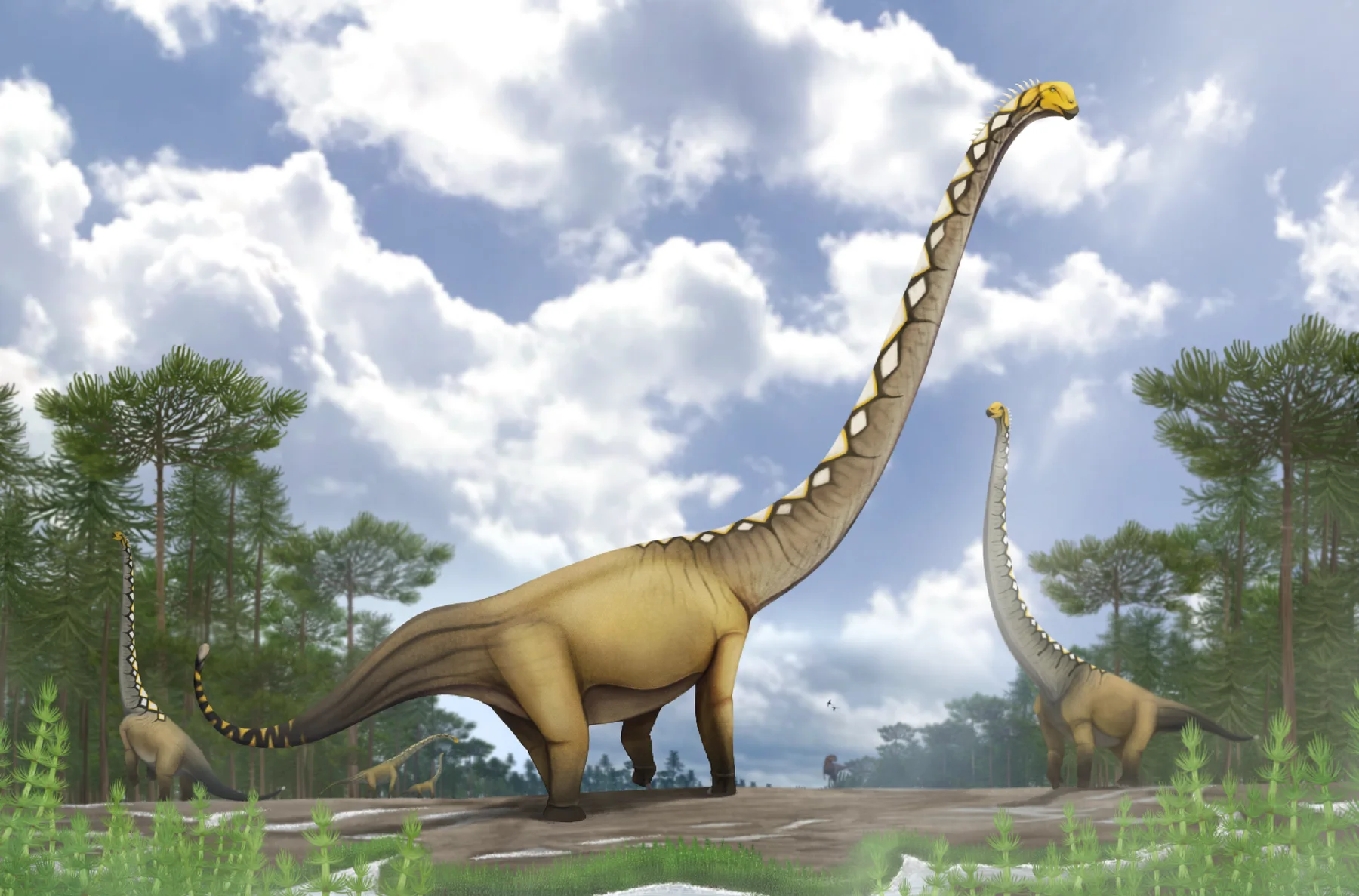
Herbivory, four-legged locomotion and a long neck are inferred from its mamenchisaurid relationships, not preserved directly in the holotype. A herd shown in the life reconstruction is illustrative; no trackway, bonebed or associated individuals demonstrate grouping in Uragasaurus.
Worth knowing
Fossil distribution
Kham Muang District, Kalasin Province, Thailand
Lower Phu Kradung Formation
approximate site marker
Markers are deliberately approximate. They identify published fossil areas without exposing sensitive excavation coordinates.
Open interactive mapFossil specimen record
Maha Sarakham, Thailand
Permanent research repository of the original diagnostic anterior dorsal vertebra. The institution's website confirms its research and collection role; continuous public display is not confirmed.
A research repository is not necessarily a public exhibit. Loan and display status can change, so check with the institution before visiting.
Media record
Evidence
Apirut Nilpanapan, Sita Manitkoon, Varavudh Suteethorn, Komsorn Lauprasert · Scientific Reports 16 · 2026
Open sourceMahasarakham University
Open source