Luming fossil locality
Xiangyun County, Dali, Yunnan Province, China
Fengjiahe Formation
regional marker
Pronunciation: shyang-yoon-LONG fung-MING
A large early sauropodomorph from Yunnan, China, represented by a mature partial skeleton that illuminates body-size evolution before true giant sauropods.
Last updated 23 July 2026
Field guide
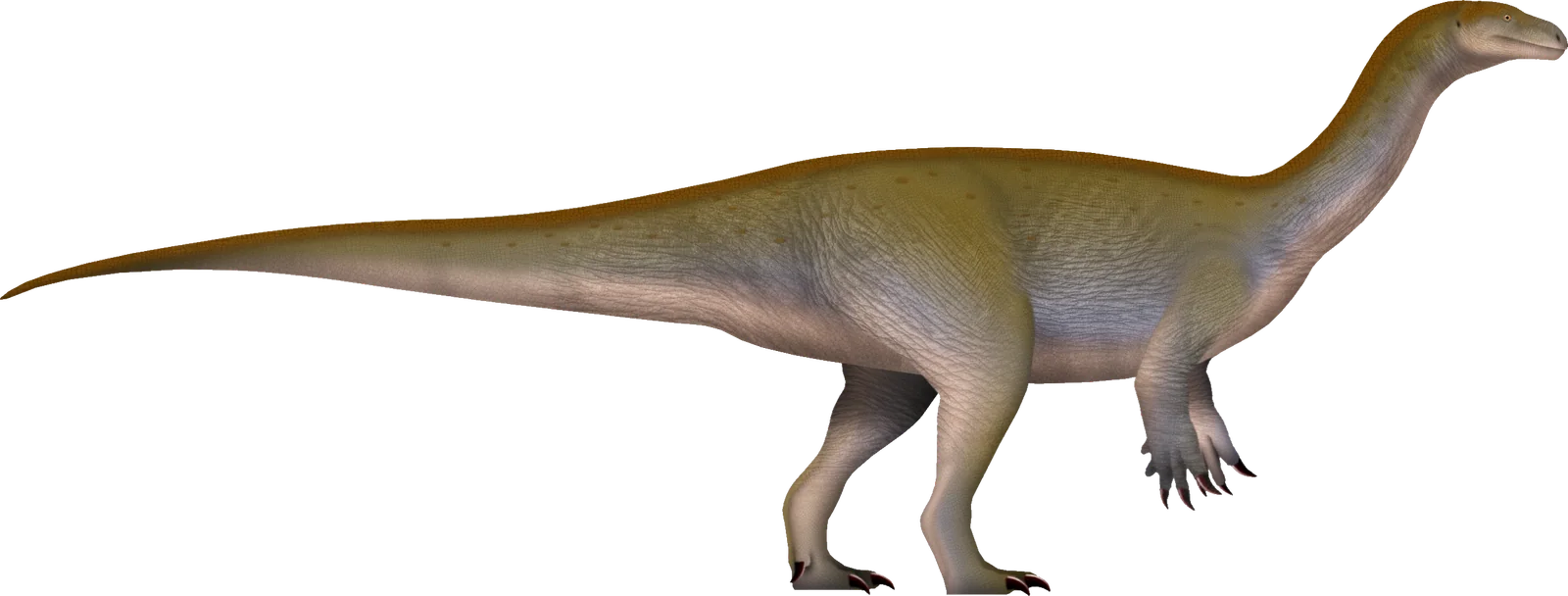
Xiangyunloong fengming was a non-sauropodan massopodan sauropodomorph from the Early Jurassic Fengjiahe Formation. At an estimated nine to ten metres long, it ranks among the largest early-diverging sauropodomorphs known from China. Its skeleton combines a comparatively short neck with a long tail and robust pelvis. Phylogenetic analyses place it between massospondylids and Sauropodiformes, close to species of Xingxiulong, but the exact branching order remains unresolved.
Its fossils occur between approximately 199.5 and 190.8 million years ago. Values shown here are approximate and reflect the current curated seed dataset.
Form and function
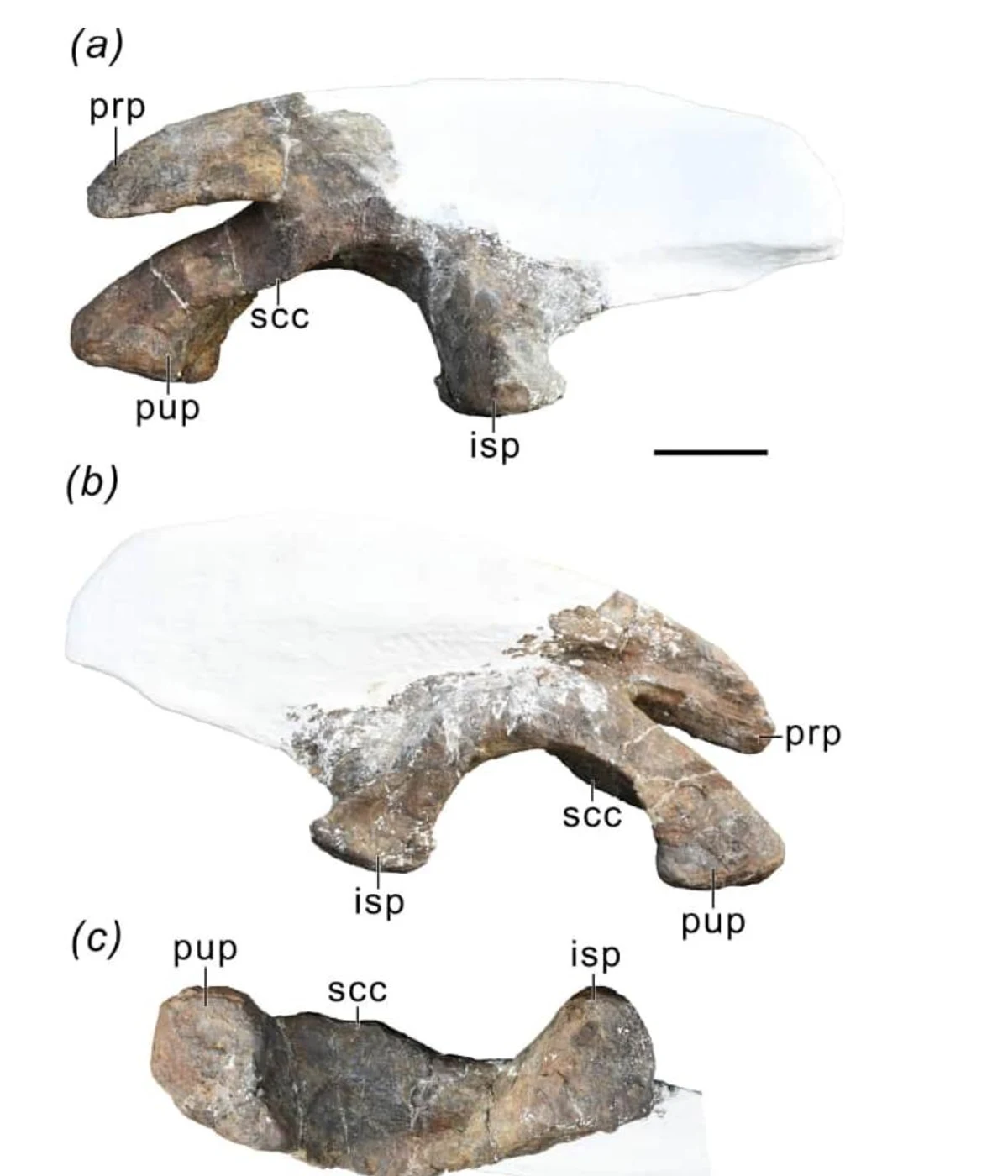
Specimen YDDY 10001–10041 preserves cervical, dorsal, sacral and caudal vertebrae plus an ilium and ischium. Nearly all visible neurocentral sutures are closed, supporting skeletal maturity. Unique features include a lateral expansion midway up the neck neural spines, tall hyposphenes in the back vertebrae, and an ilium with a shortened blade and a strongly flaring supracetabular crest. The authors estimated total length at about nine to ten metres from the preserved vertebrae.
Evolutionary position
This simplified classification path shows one placement from Dinosauria to this species. Each step is clickable, and other analyses may support alternative relationships.
Open interactive positionScale
Simplified length comparison using preferred dataset estimates; body shape and posture are not represented.
Scientific record
Staff of the Yunnan Institute of Geological Survey and the Lufeng natural-resources bureau discovered and excavated the associated skeleton at a newly recognised site in Luming Town, Xiangyun County, about 200 kilometres west of the famous Lufeng localities. Shao-Bin Hu and colleagues named it on 6 May 2026. Xiangyun means auspicious clouds and names the county, while loong is Chinese pinyin for dragon. Fengming, phoenix singing, echoes the nearby place-name Luming and honours artist Lin Fengmian.
Discovery credit: Yunnan Institute of Geological Survey field team, Lufeng natural-resources bureau field team.
Naming authors: Shao-Bin Hu, Yan-Chao Wang, Xiong Mo, Hai-Lu You.
Palaeoenvironment
The Fengjiahe Formation near Luming consists mainly of continental red beds with mud cracks and wave ripples. The authors interpret shallow-lake margins, shorelines and river settings. Xiangyunloong comes from a newly documented locality outside the better-known Lufeng fossil district, extending the geographic record of large Early Jurassic sauropodomorphs in Yunnan.
Its large body, robust pelvis and sauropodomorph relationships indicate herbivory and a capacity for four-legged support, while early massopodans may also have reared or walked bipedally. The skeleton does not preserve tracks, stomach contents, nests or a group association, so posture, feeding height and social behaviour remain reconstructions.
Worth knowing
Fossil distribution
Xiangyun County, Dali, Yunnan Province, China
Fengjiahe Formation
regional marker
Markers are deliberately approximate. They identify published fossil areas without exposing sensitive excavation coordinates.
Open interactive mapFossil specimen record
Kunming, China
Repository of the associated vertebral column and pelvic material. The paper confirms the specimen's institutional home; public exhibition is not confirmed.
A research repository is not necessarily a public exhibit. Loan and display status can change, so check with the institution before visiting.
Media record
Evidence
Shao-Bin Hu, Yan-Chao Wang, Xiong Mo and 3 coauthors · Royal Society Open Science 13, 252219 · 2026
Open source